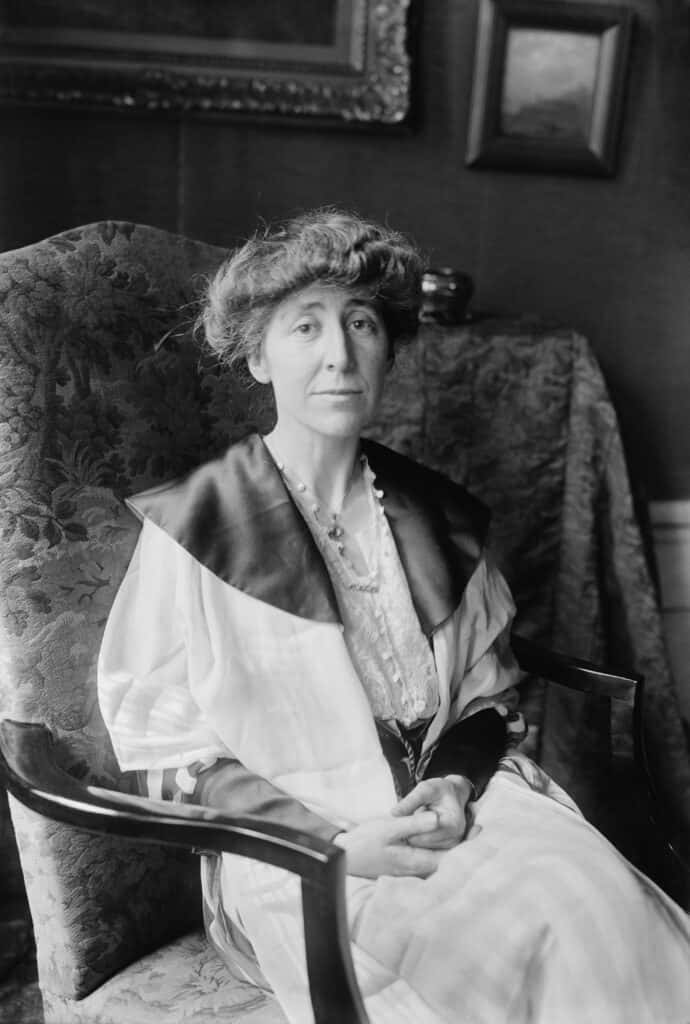
When Jeannette Rankin won her seat in the House of Representatives from Montana on November 7, 1916, she didn't just make personal history — she shattered a barrier that had stood since the founding of the republic. On this day, she became the first woman ever elected to the United States Congress, marking a monumental moment in the long fight for women's equality and political representation.
A Champion of Women's Rights
Born in 1880 in Missoula, Montana, Jeannette Rankin grew up as the eldest of six children, pitching in alongside her parents to keep the family ranch running. Life on the frontier showed her something that would shape her entire future: the women around her worked every bit as hard as the men, yet they were denied an equal voice in the decisions that affected their lives. That glaring injustice lit a fire in her early on, driving her toward a lifelong commitment to women's rights.
In 1902, she earned a degree in Biology from the University of Montana. But after graduating, she realized that her heart wasn't in the laboratory — it was in the public arena, fighting for the rights of women. She threw herself into the suffrage movement, taking on roles as both a lobbyist and a social worker.
A Leap into Politics
Over the following decade, her activism gained serious momentum. She broke new ground in 1911 when she became the first woman to officially testify before a state legislature in Montana. By 1914, she had risen to the position of legislative secretary for the National American Women's Suffrage Association. Back in her home state of Montana, Jeannette emerged as a driving force behind the suffrage movement, playing a pivotal part in helping Montana become the 10th state in the United States to grant women the right to vote.
Then, in 1916, she took the boldest step yet — running for Montana's House seat. She won, and in doing so, became the first woman elected to Congress.
Symbol of Progress and Peace
Once in Congress, Rankin quickly became recognized for her unwavering commitment to peace. Her opposition to war drew widespread public attention, and she holds the singular distinction of being the only member of Congress to vote against the United States' entry into both World War I and World War II — a stance that earned her considerable unpopularity. Yet even after leaving Congress, she never wavered, dedicating many years to championing pacifist causes and remaining a prominent voice in the peace movement.
The groundwork Jeannette Rankin laid for women in government and social reform cannot be overstated. Her fierce dedication to pacifism has cemented her legacy as an enduring symbol of both progress and peace.