What started as a small printing operation in New York City on November 5, 1733, would go on to shake the foundations of colonial power. That was the day The New York Weekly Journal hit the streets for the first time—a bold, confrontational publication brought to life by John Peter Zenger, a German immigrant with a printing press and, as it turned out, an iron spine.
The Backstory
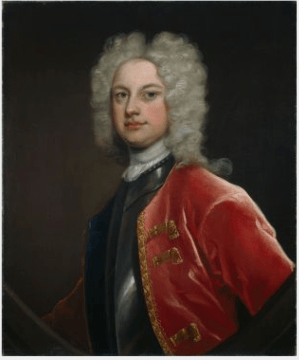
Governor William Cosby had been running New York with an iron fist in the early 1700s. He strong-armed the courts, removed judges who dared to stand against him, and laid claim to money he hadn't rightfully earned. The trouble was, anyone hoping to read about these abuses had nowhere to turn—the city's sole newspaper, the New York Gazette, was operated by William Bradford, a Cosby loyalist. That left a group of opposition figures—lawyers, judges, and reformers—searching for another way to get the word out. They found their answer in Zenger, a former apprentice of Bradford and the only other printer in all of New York. They had the words. He had the press.
The Result: The New York Weekly Journal
From the moment its debut issue landed on November 5, 1733, the paper pulled no punches. Governor Cosby's abuses of power were laid bare, his authority openly questioned, and sharp satirical pieces—written under pseudonyms—filled its pages. Issue after issue, the Journal grew into a persistent irritant to the colonial establishment.
Behind the scenes, the real writers were James Alexander, William Smith, and Lewis Morris, all of whom kept their identities hidden. Zenger, however, put his name on every printed page—and that painted a target squarely on his back.
Cosby wasn't about to take it quietly.
- In January 1734, he commanded that copies of the Weekly Journal be publicly burned on Wall Street.
- He posted a £50 reward for anyone who would reveal the authors.
- Grand juries, however, refused to hand down indictments.
- So Cosby shifted his approach.
On November 17, 1734, Zenger was thrown into jail on charges of seditious libel—a crime that carried the threat of imprisonment. Yet Zenger refused to break. Locked in a cell in the attic of New York City Hall, he endured while his wife Anna took over the printing press and kept the Journal alive without interruption.
When the case finally reached trial in 1735, Zenger's legal team mounted a revolutionary argument: truth ought to serve as a valid defense against charges of libel. If what had been printed was factually accurate, how could it possibly constitute a crime?
The jury sided with Zenger. The verdict: not guilty.
In that single moment, a foundational principle of American liberty—freedom of the press—took root.
Why does this matter today?
It matters because the case proved that journalism, even in its earliest and most fragile form, could stand toe-to-toe with those in power. It demonstrated that one person armed with a press could demand accountability from the government. It revealed that the written word was a force capable of challenging authority itself. The New York Weekly Journal continued publishing until 1751. Zenger himself passed away in 1746, but his legacy endures—etched into history books and woven into the legal bedrock of a free press.