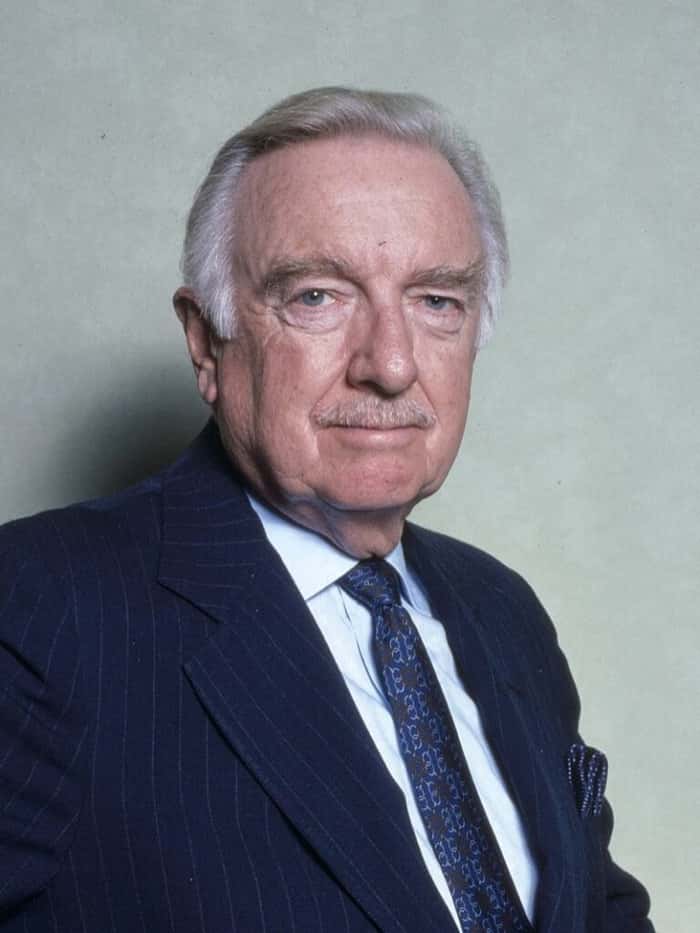
On this day, we mark the arrival of Walter Cronkite into the world — a man who would go on to become one of American journalism's most towering figures. Walter Cronkite came into the world on November 4, 1916, and over the decades rose to iconic status as a news anchor widely regarded as "the most trusted man in America." From behind the desk of the CBS Evening News, he guided audiences through some of the 20th century's most defining events, from the assassination of President Kennedy to the moon landing. His steadfast dedication to honest reporting, regardless of the challenges he faced, played a significant role in shaping how the public understood the world — establishing a gold standard for journalistic integrity and offering his viewers a deep sense of stability and trust.
Fun Facts:
- St. Joseph, Missouri, was the birthplace of Walter Cronkite, and it was while contributing to his high school newspaper that his passion for journalism first took root.
- Before making the leap to television news, Cronkite launched his broadcasting career in radio, where he reported on World War II as a correspondent for United Press International.
- From 1962 to 1981, he served as anchor of the CBS Evening News, bringing Americans front-row coverage of watershed moments including the Vietnam War, the 1969 moon landing, and Watergate.
- Every broadcast concluded with his now-legendary sign-off: "And that's the way it is." Far more than a simple farewell, this phrase served as a quiet promise to his audience — an assurance that what they had just heard represented the most accurate and dependable reporting available. It became inseparable from his identity and only deepened his standing as a trusted voice in American life.
- A career-defining chapter came with Cronkite's coverage of the assassination of President John F. Kennedy in 1963. His visibly emotional response on air captured the collective shock and sorrow gripping the nation, and in doing so revealed a deeply human side that resonated powerfully with viewers and only strengthened the bond of trust they felt toward him.
- At a time when television was still vying for dominance against print and radio media, Cronkite played an instrumental role in transforming TV news into a primary information source for American families — a shift whose significance is hard to overstate.
- Long after stepping away from the anchor desk, Cronkite continued to command deep respect across the journalism world, championing media ethics and the imperative of unbiased reporting with characteristic conviction and serving as a guiding light for an emerging generation of journalists.
- The legacy Walter Cronkite left behind endures powerfully, continuing to motivate new generations of journalists to hold fast to the principles of truth and integrity.