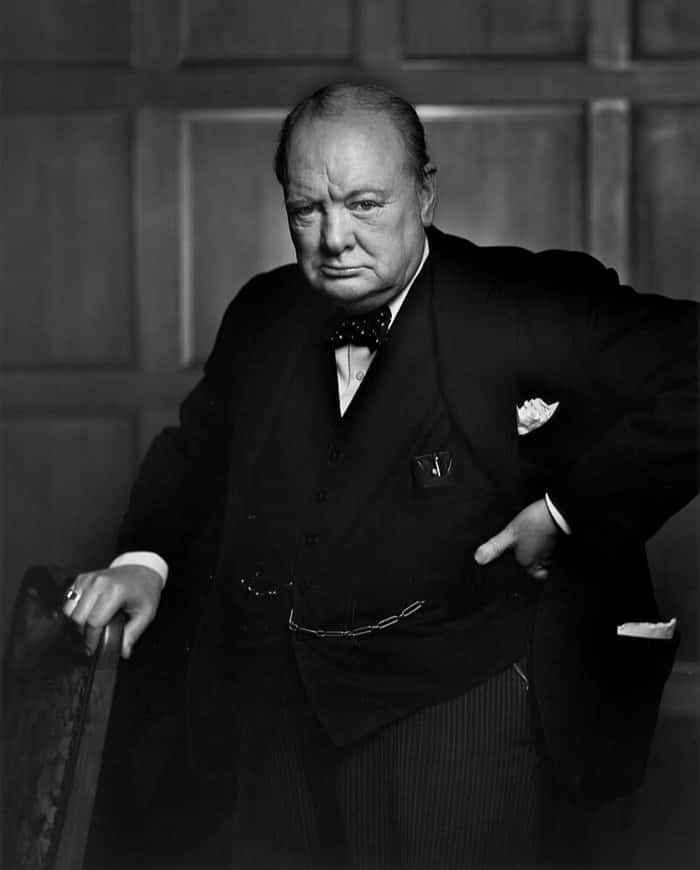
The world welcomed one of its most consequential leaders on November 30, 1874, when Winston Churchill arrived at Blenheim Palace, Oxfordshire. Destined to become Britain's Prime Minister and an iconic wartime figure, Churchill would go on to live a life packed with extraordinary episodes — from a daring escape out of a Boer War prison to bold political gambits like his involvement in the Gallipoli Campaign. His legendary eloquence and sheer determination proved indispensable as he guided Britain through the bleakest chapters of World War II.
Fun Facts:
- A Storied Lineage: Born into the aristocratic Spencer-Churchill family, Winston Churchill carried a fascinating blend of transatlantic heritage. His father, Lord Randolph Churchill, was an established British politician, and his American mother, Jennie Jerome, moved in elite circles as a New York socialite. This distinctive combination of British political influence and American social charm helped forge Churchill's audacious and frequently unconventional personality, leaving a deep imprint on both his political outlook and his distinctive communication style.
- Military Beginnings: Before entering politics, Churchill launched his career in the British Army, where he served as both a soldier and war correspondent in engagements like the Second Boer War. His courageous escape from a Boer War prison and his involvement in the Battle of Omdurman showcased his fearless, adventurous nature and catapulted him into the public eye. Through his vivid writings about these experiences, he quickly gained a reputation as a gifted communicator.
- The Prime Minister during WWII: In 1940, Churchill stepped into the role of Britain's Prime Minister, shouldering the immense burden of leading the nation through World War II. Stirring addresses like "We shall fight on the beaches" galvanized the British people and transformed him into an enduring emblem of patriotism and unyielding resolve.
- Literary Achievements: Churchill's talents extended well beyond the political arena — he was a prolific author whose intellectual gifts earned him the Nobel Prize in Literature in 1953, awarded for his remarkable historical writings. Works such as The Second World War series stand as major contributions to the canon of historical literature.
- Lasting Legacy: As a fierce champion of democracy, Churchill's influence reverberates long after his lifetime. Celebrated for his unbreakable spirit, he shaped the course of global politics and remains a powerful symbol of freedom and resilience forged in the fires of turbulent times.