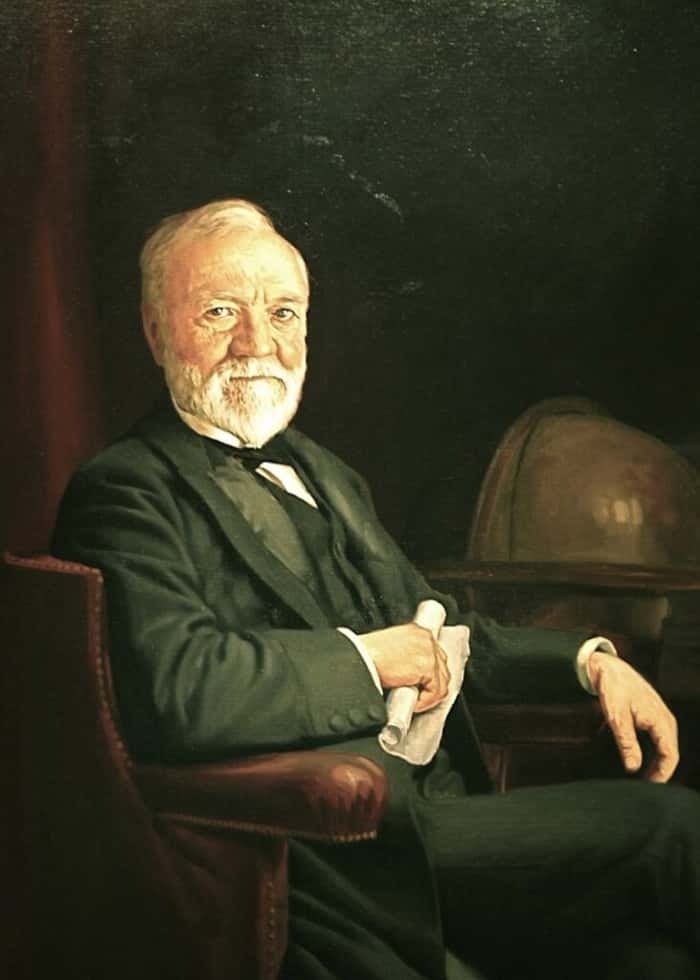
From modest origins in Dunfermline, Scotland, where he was born on November 25, 1835, Andrew Carnegie would go on to become one of the richest and most generous individuals in American history. His remarkable transformation — from an impoverished immigrant to a titan of the steel industry — embodies both the opportunities and the struggles inherent in the American Dream. To this day, Carnegie's legacy endures, drawing admiration for his extraordinary business accomplishments and his deep dedication to philanthropy.
Fun Facts:
- Early Life and Immigration: When Andrew Carnegie was just 13, his family made the transatlantic move to the United States in 1848, putting down roots in Pittsburgh, Pennsylvania. There, the young Carnegie took his first job as a bobbin boy in a cotton mill, bringing home a meager $1.20 a week.
- Rise in the Steel Industry: Carnegie turned his attention to iron and steel investments during the 1870s, eventually founding the Carnegie Steel Company. Through the adoption of the Bessemer process — a technique that dramatically accelerated steel production while cutting costs — his company transformed the American steel industry. When he sold the enterprise to J.P. Morgan in 1901 for a staggering $480 million, Carnegie cemented his place among the wealthiest individuals on the planet.
- Philanthropic Vision: Guided by his conviction that "the man who dies rich dies disgraced," Carnegie channeled the later years of his life into giving away his fortune. His generosity funded more than 2,500 public libraries, brought Carnegie Mellon University into existence, and gave rise to the Carnegie Foundation — an institution dedicated to advancing education, science, and international peace.
- Legacy and Impact: The industrial contributions Carnegie made helped propel the United States into its role as a global manufacturing powerhouse, leaving a profound and lasting imprint on American society. His philanthropic endeavors — responsible for the creation of countless libraries, universities, and foundations that bear his name — continue serving the public good today, guaranteeing that his influence remains very much alive.