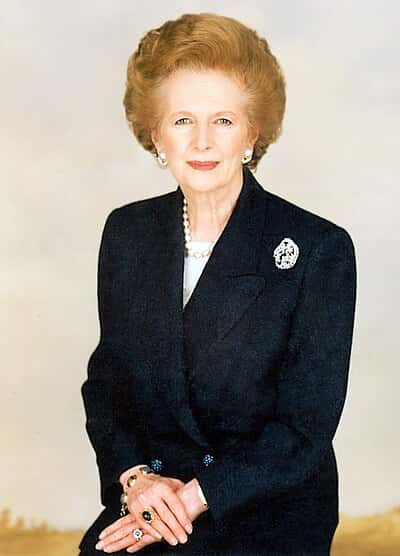
It's impossible to overstate Margaret Thatcher's significance in both British and women's history. By becoming the United Kingdom's first female Prime Minister, she shattered a glass ceiling for women seeking the highest levels of government leadership. Her time in office spanned the longest continuous premiership of the 20th century, during which she reshaped British economic and domestic policy in profound ways. Yet on November 22, 1990, she stood before the public and declared her intention to step down — ending her time in power, but certainly not the legacy she left behind.
Polarizing Popularity
Few political figures have provoked such extreme reactions as Margaret Thatcher, who inspired fierce loyalty and deep animosity in nearly equal measure. In 1975, she won the leadership of the Conservative Party through a decisive vote, and by 1979, she had claimed victory in the general election to become the UK's Prime Minister. The moment was groundbreaking — no woman had ever held the office before, and her ascent demolished long-standing gender barriers in British politics.
Yet even though she had won by a wide margin, Thatcher watched her popularity erode dramatically during her first term. A punishing recession and soaring unemployment forced her hand toward stringent measures aimed at reining in inflation, and the public took notice. By 1981, polling showed her approval ratings had cratered to a historic low of just 16%.
Then came the Falklands War of 1982, which transformed her political fortunes almost overnight. Britain's victory in the conflict allowed Thatcher to cultivate the persona of a resolute war leader, and her role in the success resonated powerfully with voters. Riding this wave of renewed support, she swept back into office in a landslide reelection.
A third term followed, though Thatcher remained as divisive as ever. To her admirers, she was a towering figure worthy of devotion; to her detractors, she was nothing short of a villain. Love her or loathe her, however, there was no denying the indelible mark she left on British history.
Her Downfall
The unraveling of Margaret Thatcher's political career played out like a dramatic saga, driven by a collapse of support within the very Conservative Party she had led to repeated victories. Her introduction of the deeply unpopular "poll tax" — a fixed local levy — ignited widespread protests and riots across the UK. Making matters worse, she repeatedly rejected proposals related to the European Community, a stance that alienated key members of her own cabinet. The breaking point arrived when her last remaining original cabinet member stunned Westminster with a speech announcing his resignation, a move that rattled Conservative loyalists and amplified demands for new leadership.
Seizing the moment, Michael Heseltine — a long-standing political rival of Margaret Thatcher — declared his candidacy for Prime Minister. Facing the stark reality that holding onto power was likely no longer possible, Thatcher chose to withdraw from the contest for the sake of party unity. On November 22, 1990, she delivered an official public statement confirming her decision to resign as Prime Minister.
Aftermath
Following a final, emotionally charged public appearance, Margaret Thatcher tendered her formal resignation to Queen Elizabeth II on November 28, 1990. She remained in a caretaker capacity as Prime Minister throughout the transitional period while the Conservative Party selected its next leader.
With her departure, an era in British politics drew to a close — but the profound influence Margaret Thatcher exerted on history has endured long after she left office.