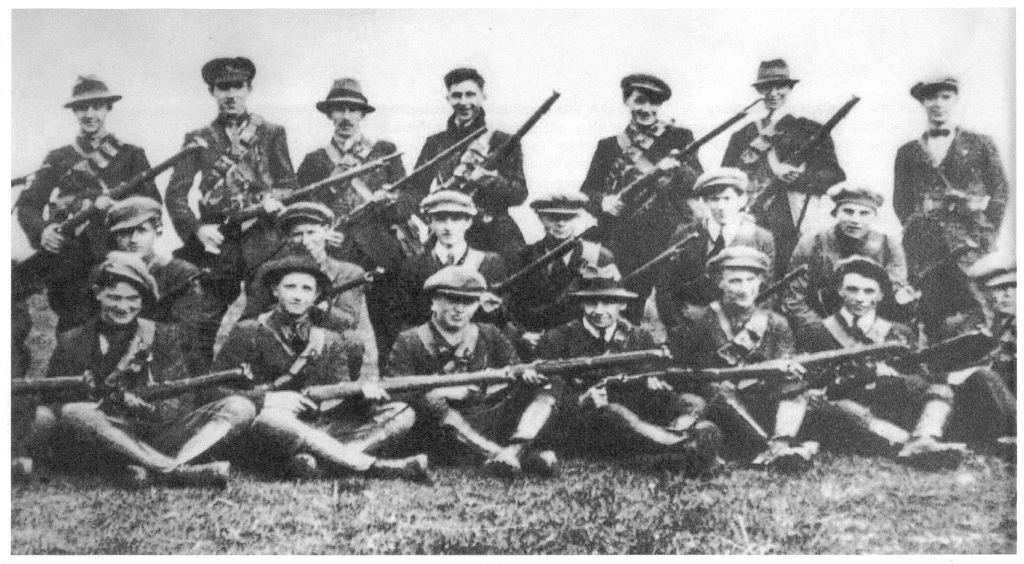
Dublin witnessed one of its darkest chapters on November 21, 1920, a day that would forever be remembered as "Bloody Sunday" — a pivotal moment in the Irish War of Independence. That morning, a carefully orchestrated operation led by Michael Collins sent IRA operatives to locations across the city, where they killed 14 British intelligence officers and informants belonging to a covert network called the "Cairo Gang." The purpose behind this bold and brutal strike was clear: to cripple the British surveillance apparatus that had been monitoring the IRA's activities and undermining their operations.
The violence was far from over when the morning's attacks concluded. That afternoon, British auxiliary forces descended on Croke Park Stadium, packed with spectators enjoying a Gaelic football match. Without warning, they fired into the crowd, killing 14 civilians and wounding scores more. This shocking act of retaliation deepened the horror of an already devastating day, fueling widespread outrage that drew both domestic and international sympathy toward the cause of Irish independence and laid bare the mounting savagery of the conflict.
Fun Facts:
- Michael Collins' Intelligence Strategy: As the mastermind behind the IRA's intelligence operations, Collins devised a precise plan to neutralize the Cairo Gang. His approach targeted the very individuals at the heart of British intelligence, aiming to render their surveillance network inoperable.
- Unprecedented Violence: What unfolded that day stands as one of Dublin's bloodiest episodes throughout the entire war. The juxtaposition of calculated assassinations in the morning and the horrific massacre at Croke Park revealed just how deeply the desperation and hostility had intensified on both sides.
- Impact on Public Opinion: The indiscriminate shooting at Croke Park ignited fury across Ireland and well beyond its borders, swaying more Irish citizens and international observers to oppose British rule in Ireland.
- British Intelligence Setback: Losing so many key intelligence operatives dealt a crippling blow to British military operations throughout Ireland, handing the IRA a significant strategic edge.
- A Turning Point in the War: Many historians regard "Bloody Sunday" as a watershed moment that strengthened Irish resistance and built unstoppable momentum toward the Anglo-Irish Treaty in 1921, which ultimately opened the door to Irish independence.