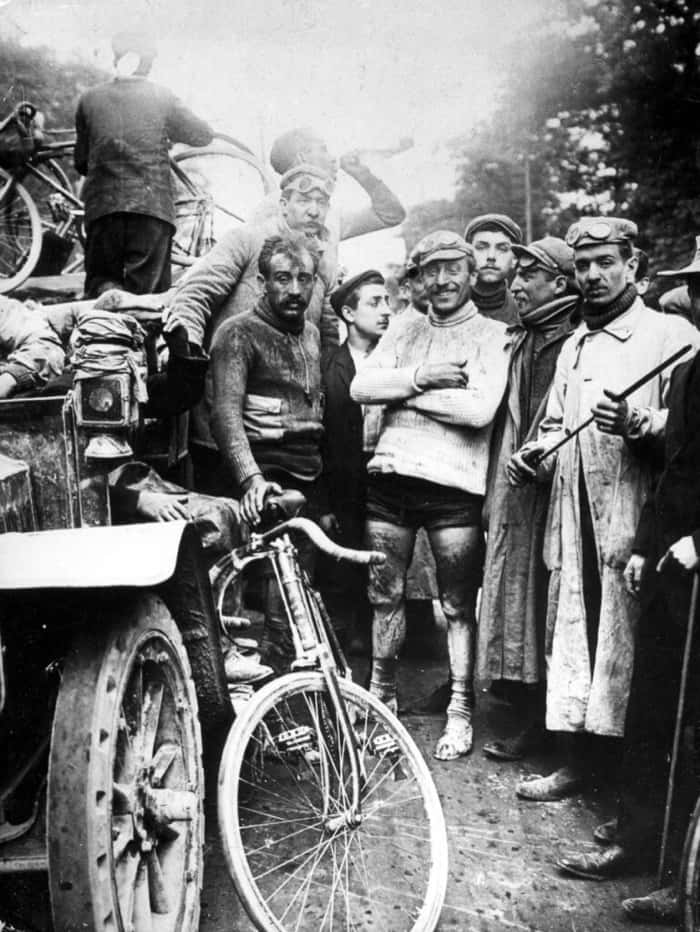
It was November 20th, 1902, and a journalist facing professional pressure struck upon a brilliant concept that would not only rescue his career but fundamentally transform the sport of cycling forever. In the early 1900s, bicycle racing had captured the public's imagination, and newspapers eagerly covered the competitive world of two-wheeled sport. Among them was the French publication L'Auto, which found itself in a tough spot — losing ground to rival outlets in the race for readership. Desperate for a solution, the paper's editor, Henri Desgrange, gathered his team for an urgent brainstorming session. That's when a young journalist by the name of Geo Lefevre seized the moment with a daring proposal: what if they organized a multi-day cycling race spanning the whole of France — one that only their newspaper would cover? It was a stroke of genius that gave rise to the Tour de France, destined to become cycling's most celebrated and punishing competition.
Fun Facts:
- Though the concept for the Tour de France took shape in late November 1902, riders wouldn't line up for the inaugural race until July of 1903.
- Spanning 19 days, that first race attracted about 80 entrants, drawn in no doubt by the thrill of adventure and a tempting grand prize of 12,000 francs!
- Organized across 5 stages, the race proved far more demanding than most competitors anticipated. The majority dropped out after just the first stage, completely overwhelmed by the physical toll. The brutal conditions whittled the field down relentlessly — by the 4th stage, a mere 24 riders were still pedaling. The man who outlasted them all and claimed victory was Maurice Garin.
- L'Auto's editor, Henri Desgrange, was no stranger to cycling himself — he was a rider with records to his name. He earned the enduring title of "father of the Tour" and remains recognized as the driving force behind one of the world's most iconic and beloved sporting events.
- As for Geo Lefevre, his gamble paid off spectacularly. His innovative idea didn't just shake up the cycling world — the impact of that inaugural Tour de France was nothing short of transformative. L'Auto saw its publications double, unmistakable proof of the race's massive appeal and the dawn of an exciting new chapter in sports journalism!