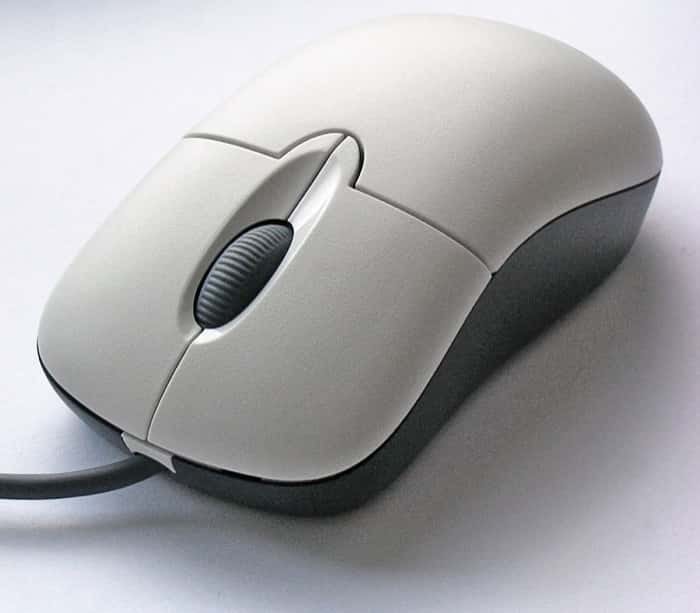
On November 17, 1970, a patent was granted to Douglas Engelbart for what would become one of the most consequential inventions in computing history — the computer mouse. Initially dubbed the "X-Y position indicator," this deceptively simple device revolutionized the way humans communicate with computers, setting the stage for the intuitive graphical interfaces that billions of people depend on today.
Fun Facts:
- What made Douglas Engelbart's concept so remarkable was its ambition. He didn't envision the mouse as a standalone gadget — it was one piece of a much grander system designed to make computing truly interactive. His earliest prototypes reflected that forward-thinking spirit, featuring a wooden shell that enclosed two perpendicular wheels to track movement.
- Two years before the patent was granted, Engelbart gave a landmark public demonstration in 1968 that would later earn the legendary nickname the 'Mother of All Demos.' During this presentation, he revealed the mouse's ability to navigate and control computer systems, an experience that left attendees astonished by what the technology could do.
- The mouse went on to become an essential element of the graphical user interface (GUI), a paradigm shift that swapped out old text-based interfaces for visual representations of data and actions. Companies like Apple and Microsoft brought this format to the masses, making computing far more intuitive and accessible to millions — and the mouse served as the primary instrument for navigation and control throughout it all.
- If you placed Engelbart's original mouse next to a modern one, you'd barely recognize them as relatives. The first version resembled a small wooden block fitted with wheels, a far cry from today's sleek peripherals. Its dramatic design evolution, particularly with the rise of the trackball, stands as a fascinating reminder of how much technology can transform over time.
- The foundation that Engelbart's invention established continues to support technological progress to this day. Far from fading into obsolescence, the computer mouse has remained a core tool in computing, steadily evolving from its original mechanical design into the wireless and optical versions we now take for granted.