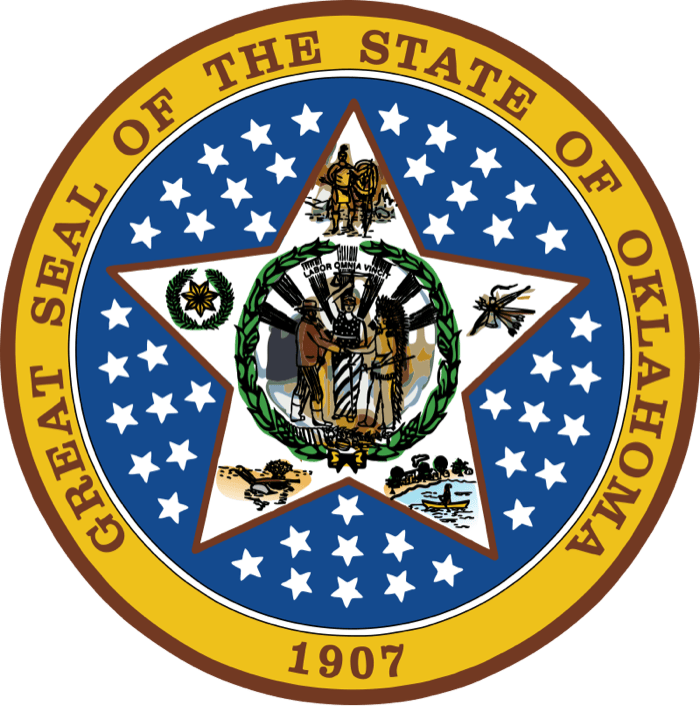
The year was 1907, and on this very day, a territory steeped in cowboy lore, sprawling oil fields, and deep Native American heritage officially took its place in the Union. Oklahoma was admitted as the 46th state of the United States — but calling it "just another star on the flag" would be a serious understatement. Its journey to statehood ranks among the most complex and dramatic in all of American history.
From Indian Territory to Statehood
- In 1803, the vast majority of present-day Oklahoma fell within the boundaries of the Louisiana Purchase.
- Under the Indian Intercourse Act of 1834, the U.S. set this land aside for displaced Native American tribes, and it came to be called Indian Territory.
- Over the course of the 19th century, tribes including the Cherokee, Choctaw, Chickasaw, Creek, and Seminole were forcibly uprooted and marched to this region along the Trail of Tears.
- The western portion, meanwhile, was formally organized as the Oklahoma Territory in 1890, throwing open its doors to white settlers.
Side by side, these two worlds — Indian Territory and Oklahoma Territory — grew in parallel, each developing its own distinct population, economy, and system of governance.
The Push for Unity
Congress was firm: the two territories would enter the Union not as separate entities but as one unified state, despite their very different histories. Some Indigenous leaders pushed back, advocating instead for an independent state they wanted to call "Sequoyah." Their proposal, however, was turned down.
In January 1906, delegates representing both territories gathered in Oklahoma City for a joint convention. There, they laid out their argument for statehood and assembled a formal petition to send to Congress.
What followed were months of intense political wrangling. Lawmakers debated whether Oklahoma's admission should be packaged together with that of New Mexico and Arizona. Ultimately, Oklahoma's case moved forward on its own. On June 16, 1906, Congress passed the enabling act, giving the green light for drafting a state constitution and establishing a government.
A New Star Rises
Residents across both territories cast their ballots in a September 1907 vote, approving statehood. Then, on November 16, 1907, President Theodore Roosevelt put pen to paper on Proclamation No. 780, formally welcoming Oklahoma into the Union. In a message delivered to Congress weeks later, Roosevelt praised the new state's arrival, highlighting its "great natural resources" and the bright future they promised.
Legacy and Impact
- The very name "Oklahoma" has Choctaw roots, derived from okla (people) and humma (red).
- Its well-known nickname, "The Sooner State," pays tribute to settlers who jumped the gun and entered Indian lands ahead of schedule during the famous land runs.
- To this day, Oklahoma is home to 39 federally recognized tribes and continues to serve as a vital cultural center for Native American communities across the country.
- The state's admission marked a pivotal moment in the broader transformation of the American West — the shift from Indigenous land to U.S. statehood.