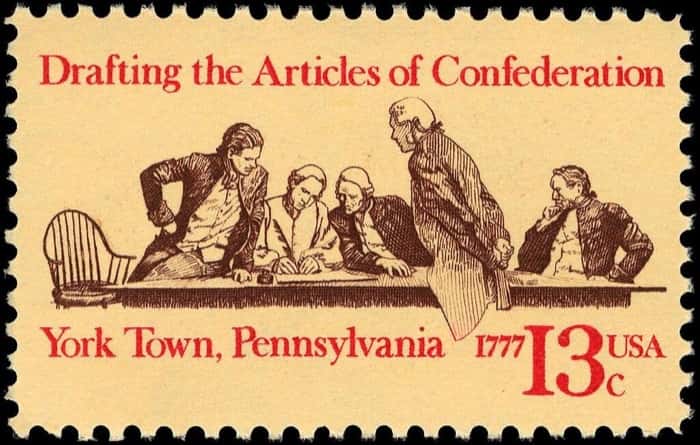
Back in 1776, the thirteen colonies of the United States took the bold step of declaring independence from Britain, embarking on the ambitious journey of building a nation from scratch. To govern themselves apart from British rule, they convened the Second Continental Congress — a governing body with representatives drawn from every colony. It was on November 15, 1777, that the Continental Congress formally adopted the Articles of Confederation, giving the United States of America its very first constitution.
Initial Framework
Having endured years under Britain's heavy-handed authority, the colonists let that bitter experience shape the kind of government they wanted to build. Their deep-seated fear of concentrated national power drove them to craft the Articles of Confederation with a deliberately weak central government, tilting authority toward the individual states instead. To ensure no state could dominate another, the Articles established a unicameral legislature where every state sent one representative and held equal voting power.
By design, the new government was stripped of many capabilities that had made British rule so infuriating to the colonists. Taxation authority was notably absent — rather than levying taxes on the states, the government could only ask them for funds. Trade and commerce regulation fell outside the government's reach as well, and no executive officials existed to enforce any rules or regulations.
What the Articles of Confederation ultimately created was a "League of Friendship" binding the 13 states together — a loosely knit alliance that prioritized each state's individual sovereignty while still fostering a sense of collective unity.
Ratification
John Dickinson led the charge in drafting the Articles of Confederation, serving as chair of a 13-member committee within the Second Continental Congress. Months of vigorous debate and careful revision followed before a completed draft made its way to the committee. Congress gave its official stamp of approval on November 15, 1777, formally adopting the Articles of Confederation.
That said, adoption by Congress was only part of the equation — every single state needed to individually approve the framework before it could take effect. This state-by-state ratification process dragged on for an additional 4 years, finally reaching completion in 1781.
Failure
While the Articles of Confederation tackled many grievances the colonists had harbored against British governance, the system they created turned out to be fundamentally flawed in practice.
- Without taxing authority, the government depended entirely on state contributions for funding, which frequently fell short of what the nation required.
- No power to regulate commerce meant that trade wars and bitter disputes erupted between the states.
- The government had no ability to raise an army, leaving the country vulnerable and unable to effectively counter threats from within or beyond its borders.
- The Articles of Confederation failed to establish a common currency, plunging the economy into chaos.
- Any amendment to the Articles demanded a unanimous vote from all thirteen states — a bar so high it was nearly impossible to clear.
In the end, the states came to grips with the reality that the Articles of Confederation simply weren't working. This realization led directly to the calling of the Constitutional Convention in 1787, a mere six years after the Articles had gone into effect. Though the Articles of Confederation ultimately fell short, they served an essential purpose: providing a fledgling country with its first real governing framework.