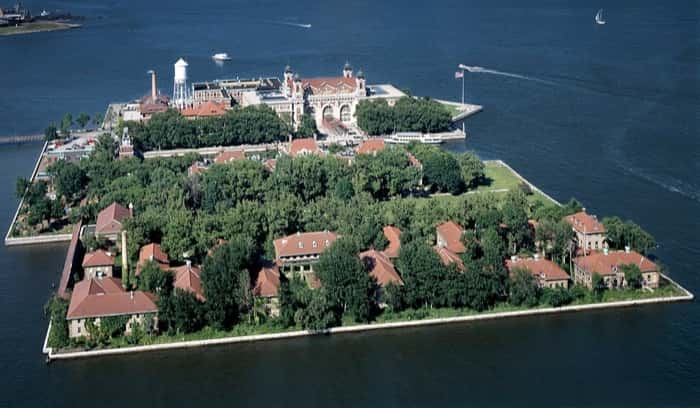
On this day, an era that had thundered through American history came to a whispered close. The great doors of Ellis Island—the legendary gateway where millions had chased the American dream—shut for good. Over the course of 62 years, more than 12 million people had passed through its halls. Now, it was over.
Let's Rewind
Replacing the disjointed, state-by-state approach to immigration processing, Ellis Island swung open its doors on January 1, 1892, as the country's first federal immigration station. The very first person to step through? Annie Moore, a 15-year-old girl from Ireland.
What followed was an unrelenting stream of hopeful newcomers arriving in waves.
- Italians, Jews, Irish, Germans, Slavs.
- Dreamers, farmers, laborers, refugees.
- All chasing the same idea: a better life.
Ellis Island was More Than a Dock
If you could afford first or second class, odds are you never set foot on the island at all. Those wealthier passengers were typically inspected aboard their ships and cleared onshore without the detour.
Everyone else—the third-class "steerage" travelers—stepped off at Ellis Island and into a gauntlet of medical examinations, legal questioning, and seemingly endless queues. Roughly 2% received the devastating news that they'd be turned away, whether for illness or other disqualifying reasons. Yet the overwhelming majority walked out the other side and into a brand-new world.
From 1892 to 1924, no immigration station in the country processed more people.
During 1907 alone, over one million souls made the passage through its gates.
But then, everything shifted.
The Immigration Act
Strict quotas arrived with the Immigration Act of 1924, which also pushed much of the processing to overseas locations. What had once been a flood of arrivals dwindled to barely a trickle.
Ellis Island found itself repurposed entirely.
- It became a detention center for immigrants facing deportation.
- A wartime hospital during WWII.
- A Coast Guard training base.
Though it continued to function as a government facility, the vibrant, bustling energy that had defined it for decades was gone.
The Final Immigrant
The last person processed on the island was Arne Peterssen, a Norwegian merchant seaman who had been detained for overstaying his shore leave. When he walked free on November 12, 1954, Ellis Island's chapter as an immigration station quietly ended.
But the story didn't finish there. In 1984, a sweeping $160 million restoration project began on the island. Six years later, the Ellis Island Immigration Museum opened its doors to the public. Today, millions of visitors arrive each year to trace their family roots and walk the same paths once traveled by those who came seeking hope.