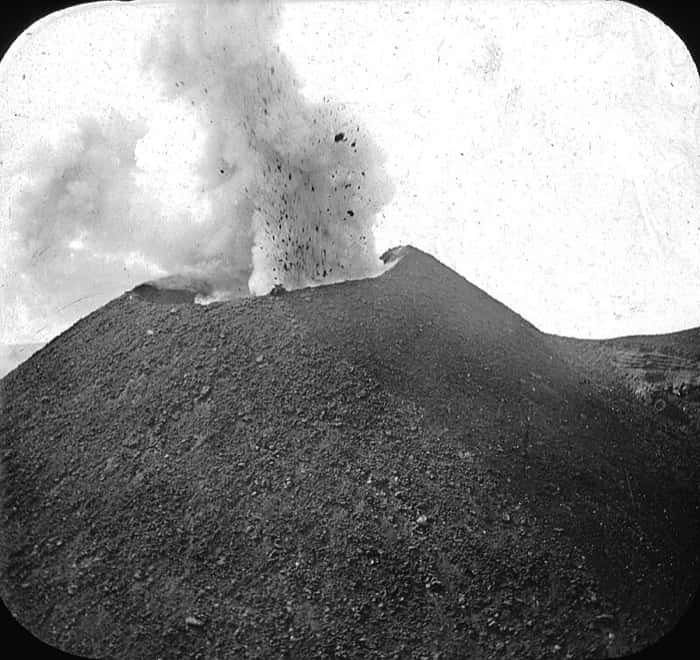
Mount Vesuvius — the 25,000-year-old volcano perched along the Gulf of Naples in Italy — roared to life on November 12, 1867. Best known for the devastating 79 A.D. eruption that wiped Pompeii off the map, Vesuvius has erupted over 30 times since then, and every episode has carved its own distinct chapter into the historical record.
The sequence of events leading to this eruption actually started years earlier, when the volcanic crater cracked open in February 1864. At first, small explosions scattered debris into the volcano's center. By 1866, lava could be seen pouring into the crater, and through 1867, the pace of that lava flow picked up considerably. Then, on November 8, relentless tremors set in — a sign that something far more dramatic was on the way.
A phase of intense activity kicked off on November 12, 1867, as part of the larger eruption sequence. Fountains of lava and chunks of volcanic rock burst from Vesuvius's summit. Within just three days, by November 15, the crater — plunging 120 meters deep — had been completely filled with lava. Over the following months, from November through February, molten rock streamed down the southeast slope. Earthquakes, ash emissions, and a fracture along the southeast flank followed in March 1868. The eruption ultimately ran its course after a final lava outflow on November 8, 1868.
Scientists gauge the power of volcanic eruptions through something called the Volcanic Explosivity Index (VEI), a scale running from 0 to 8 where each step up represents a tenfold increase in the volume of erupted material. It's a tool that offers real clarity about a volcano's destructive potential. To put it in perspective, the 1867 Vesuvius eruption registered a VEI of 2, whereas the ancient blast that entombed Pompeii reached a VEI of 5.
The most recent eruption of Mount Vesuvius occurred in March 1944, carrying a VEI of 3. Now quiet for 79 years — though still short of its longest dormant stretch of 131 years — the volcano remains classified as active. Given the destruction it has unleashed throughout the centuries, Vesuvius continues to be one of the most closely studied and critically important volcanos on the planet.