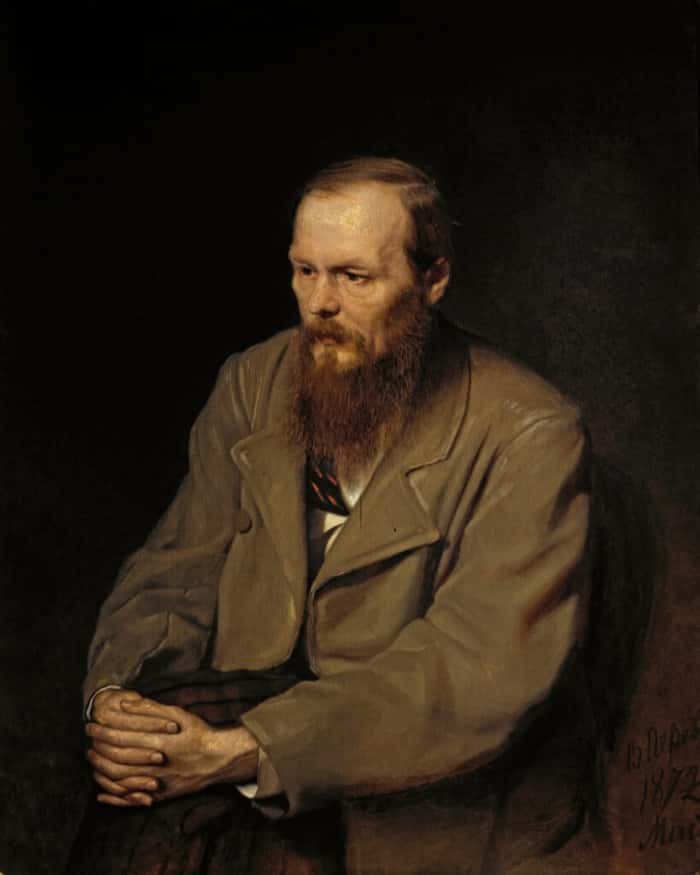
On this day in history, November 11, 1821, the world welcomed Fyodor Dostoyevsky — a Russian author who would go on to be regarded as one of the greatest novelists of all time. Through his fiction, he probed deeply into spirituality, politics, sociology, and the human condition. Among his most celebrated works are Crime and Punishment, The Idiot, The Brothers Karamazov, and Notes from Underground.
Growing up as the second of seven children, Dostoyevsky was raised by a father who served as a successful doctor at a hospital for the underprivileged. Though some characterized his father as strict and violent, Dostoyevsky himself remembered him with affection. The stories his parents read to him at bedtime would leave a lasting imprint on his literary career.
At the age of 15, Dostoyevsky entered boarding school, eventually graduating as a military engineer in 1844. Rather than follow that path, however, he chose to devote himself to writing. His debut novel, Poor Folk, appeared in 1846, earning critical acclaim and granting him entry into the literary circles of St. Petersburg.
Dostoyevsky fell in with a group of radicals in 1847, drawn to their interest in revolution and banned literature. Two years later, in 1849, authorities arrested him for involvement in anti-government conspiracies and the circulation of prohibited books. He endured a mock execution before being sentenced to four years of hard labor in Siberia — an ordeal that left deep psychological scars. The trauma reshaped both his worldview and his art: his writing grew more focused on guilt and redemption, plunging further into existentialism, while his political outlook shifted in a more conservative direction.
The influence of Dostoyevsky's writing endures to this day. Recognized for pioneering modern prose and crafting richly psychological characters, his work remains a subject of ongoing academic analysis and study. His legacy in both literature and politics extends well beyond the pages of his novels.