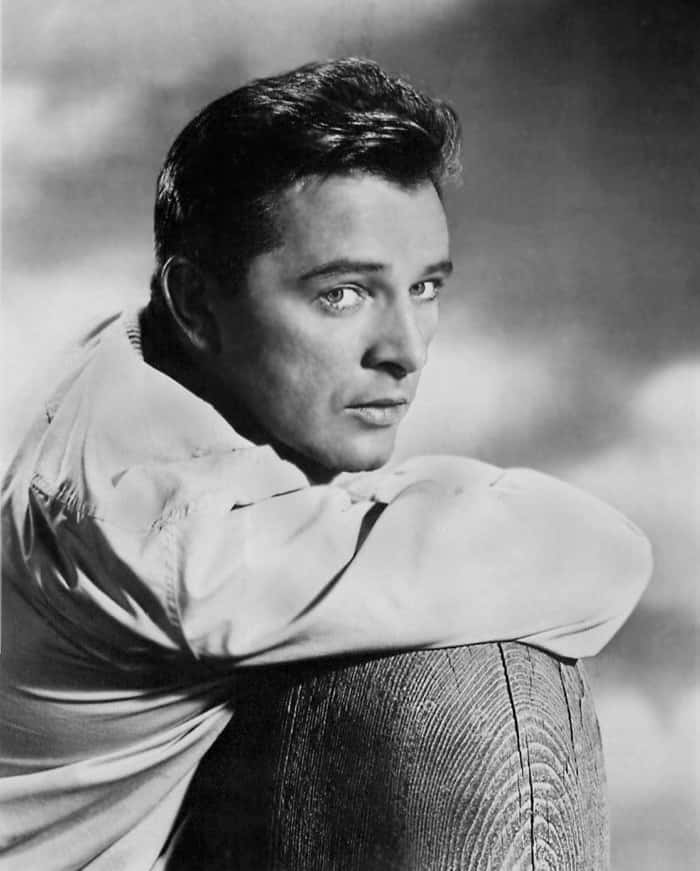
On November 10, 1925, the small coal-mining village of Pontrhydyfen, Wales, welcomed a child who would grow into one of the most electrifying performers the world has ever seen. Born Richard Walter Jenkins Jr., he would eventually be known by a different name entirely — Richard Burton — a man whose thunderous voice and fiery presence left an indelible mark on stage and screen.
Early Life
Nothing about Burton's beginnings was easy. One of thirteen children — the twelfth, to be exact — he grew up in a Welsh-speaking, working-class household. Tragedy struck early: his mother passed away when he was only two. His father, a coal miner, was largely absent from his life. Instead, it fell to his elder sister, Cis, and her husband to raise him in the gritty town of Port Talbot. The place was rough, but it shaped him into something formidable.
Even as a young man, there was something unmistakable about Burton. That deep, resonant voice of his commanded attention wherever he went. A schoolteacher by the name of Philip Burton spotted this extraordinary raw talent and took Richard under his wing, first as a mentor, then as his legal guardian. Richard adopted his guardian's surname, and with that simple act, Richard Jenkins became Richard Burton. But the change went far deeper than a name — it was the spark that ignited a breathtaking ascent.
His Rise to Fame
At 18, he was already studying at Oxford. By 24, Broadway had opened its doors to him. Come the 1950s, Burton had made both the stage and the silver screen his domain. His 1964 turn as Hamlet in New York entered the realm of legend. Critics declared him the rightful successor to Laurence Olivier. Yet there was nothing refined or genteel about Burton. He was magnetic and tempestuous, deeply flawed and brilliantly intense. Every performance crackled with raw power — and his personal life burned with equal ferocity.
Hollywood recognized his gifts with seven Oscar nominations, though the statue itself always eluded him. His filmography reads like a roster of classics: The Robe, Becket, Who's Afraid of Virginia Woolf?, and Equus, among others. That unmistakable baritone, those eyes smoldering with soul — Burton was impossible to look away from.
Then Came Elizabeth Taylor
The fateful meeting between Richard Burton and Elizabeth Taylor took place on the set of Cleopatra in 1961. Both were married to other people at the time, and the affair that erupted between them ignited a scandal of such proportions that even the Vatican weighed in with condemnation. What followed was a whirlwind: marriage in 1964, divorce in 1974, a second marriage in 1975, and a second divorce a year later. Theirs was a love defined by extremes — fierce devotion and ferocious conflict, all played out under the relentless spotlight of public fascination.
Together, Burton and Taylor transcended mere celebrity — they became a phenomenon. Yachts, jewels, headlines splashed across the globe. Their relationship was a volatile cocktail of passion and poison in equal measure. Yet Taylor's loyalty ran deep. She famously erupted on live television when a journalist dared to accuse Burton of "selling out" the stage for Hollywood riches.
The Aftermath
Public opinion never much concerned Burton. "I do it because I rather like being famous," he once quipped. But beneath the glittering exterior lived a man locked in constant battle with doubt, drink, and the crushing weight of his own brilliance. He once confessed that he would've traded Hamlet at The Old Vic to play rugby for Wales. No matter how far fame carried him, the miner's son from Pontrhydyfen never lost sight of where he came from.
Richard Burton's life was cut short in 1984. He was just 58 — gone far too soon.