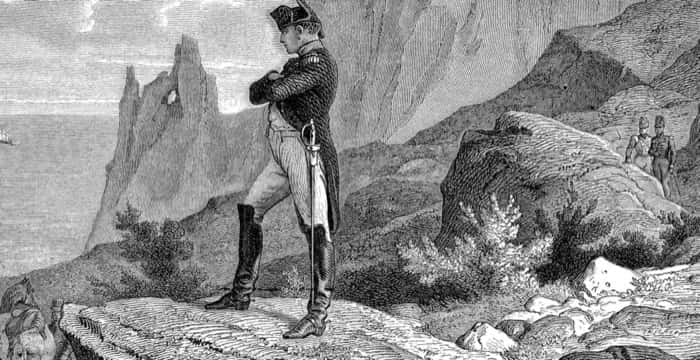
On April 11, 1814, Emperor Napoleon Bonaparte found himself with no choice but to unconditionally give up the throne of France. Widely regarded as one of history's most remarkable military commanders, Bonaparte had risen to prominence during the French Revolution before seizing power as France's emperor in 1804. His military brilliance had allowed him to bring a vast swath of Europe under his control.
Europe's allied powers came together with a singular purpose: toppling the man they identified as the only obstacle standing in the way of restoring peace across the continent. Convinced that Russia was secretly forging an alliance with England, the relentless Napoleon launched a military campaign against the Russians in 1812. The invasion proved disastrous, however, as his troops and officers were ultimately forced into a humiliating retreat from Moscow. With that defeat, more than two decades of continuous warfare finally drew to a close.
By 1814, Napoleon's own army had withdrawn its support, leaving him in a desperate position. He attempted to negotiate by proposing to abdicate in favor of his son, but this offer was flatly turned down. Left with no alternatives, Napoleon was compelled to accept the unavoidable. A treaty was subsequently drafted and signed at Fontainebleau, France, on April 11, 1814, with representatives of Austria, Russia, and Prussia on the other side of the table, formally bringing his reign as emperor of France to an end.
Under the terms of the Treaty of Fontainebleau, Napoleon was completely stripped of both his authority and his military forces. He was then exiled to the Mediterranean island of Elba. Beyond punishing Napoleon himself, the treaty barred his family members and successors from ever holding power in France. It further established the island of Elba as an entirely independent principality, granting Napoleon the title of Prince of the island along with an annual pension.