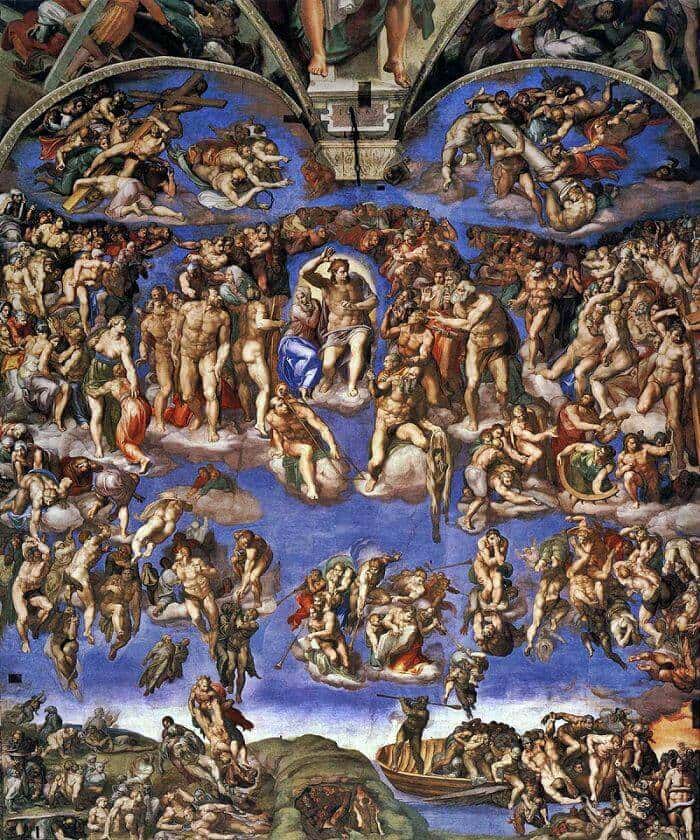
When Pope Julius II tapped Michelangelo to repaint the altar wall of the Sistine Chapel in Rome back in 1503, he set in motion one of art history's most ambitious projects — though he would never witness its completion. It wasn't until October 31, 1541, that the finished masterpiece, "The Last Judgment," was finally revealed at a ceremony attended by Pope Paul III and Emperor Charles V.
At the center of the work stands Jesus Christ, palm outstretched, dividing the saved from the damned. Featuring about 300 figures of men and angels — the vast majority depicted nude — the painting sparked as much controversy as admiration. Critics accused Michelangelo of showing no respect for the church or morality, and some went so far as to declare that merely looking at the painting was a sin.
Dante's The Divine Comedy served as a key source of inspiration, particularly its visions of Hell and Purgatory. The enormous work took four years to complete, and the passage of that time was evident not just on the wall but on Michelangelo's own aging body.
Over the centuries, the painting has invited a wide range of interpretations. Many have read it as a portrayal of God's wrath or divine justice visited upon humanity for its sins. Yet within the context of the Sistine Chapel itself, the scene carries a dual message — one of both judgment and redemption.
Around 1564, the year Michelangelo died, Mannerist painter Daniele da Volterra was brought in to paint loincloths and clothing over some of the more provocative nude figures — a task that earned him the lasting nickname "Il Braghettone" (the breeches maker). Despite being a devoted admirer and close friend of Michelangelo, Volterra initially resisted the commission. He only relented after his patron threatened to ban him from Rome if he refused. In the years since, the painting has undergone several restorations and weathered various forms of damage, including the installation of electrical wiring and the effects of smoke.