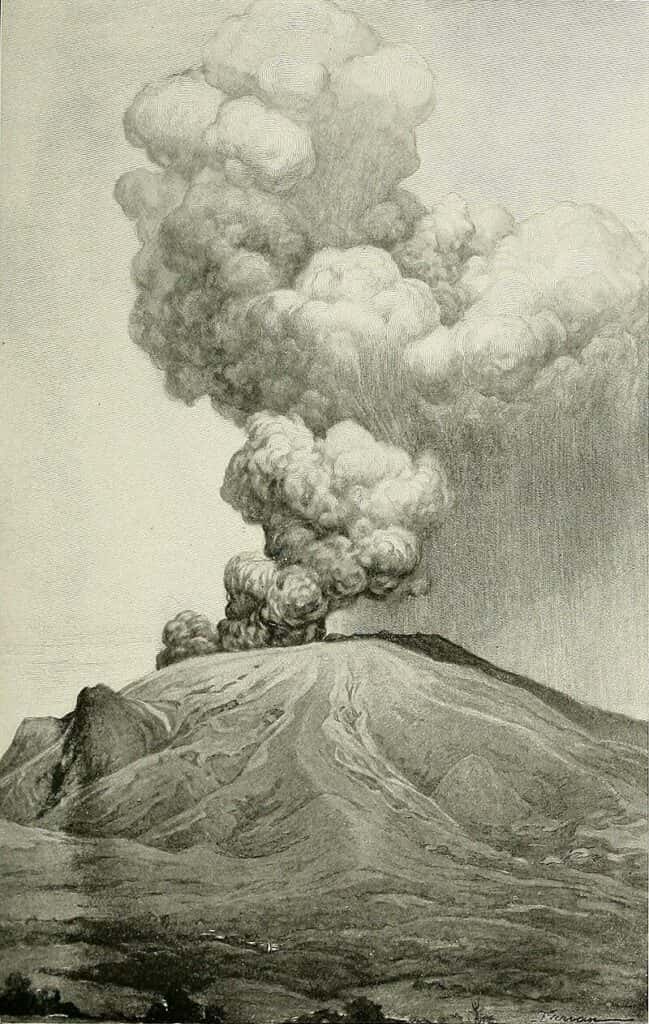
On May 8, 1902, the beautiful Caribbean Island of Martinique experienced an unimaginable catastrophe. Mount Pelée, long dormant but ominously rumbling for weeks, exploded with a violence beyond comprehension. A massive wall of destruction swept down its slopes, wiping the bustling city of Saint-Pierre off the map within mere minutes. The human cost was devastating — nearly 30,000 people perished, making it one of the 20th century's most catastrophic volcanic eruptions.
Known affectionately as the "Paris of the Caribbean," Saint-Pierre was a flourishing hub of culture and commerce. Merchants, artists, and families filled its charming cobblestone streets with life and energy. But starting in late April 1902, troubling warning signs emerged one after another: ash began to fall, animals grew increasingly agitated, and a pungent smell of sulfur hung heavy in the air — all unmistakable precursors to disaster. Adding to the danger were small earthquakes and mudslides that highlighted the growing threat. Yet despite these unmistakable signals, only a handful of residents chose to flee.
Then, at approximately 8:00 a.m. on May 8, Mount Pelée released a massive pyroclastic surge — a fast-moving torrent of superheated gas, ash, and rock — that barreled down the mountainside at a staggering speed of over 100 miles per hour. Nothing could withstand its power. Buildings were vaporized, ships anchored in the harbor burst into flames, and nearly every person in Saint-Pierre was killed in an instant.
The temperatures were so extreme that glass shattered, bodies were charred where they stood, and metal itself fused together. Those who lived through it described a "furnace wind" that tore across the city. From Saint-Pierre's tens of thousands of inhabitants, only a handful made it out alive. Among them, the most famous was Ludger Sylbaris, a prisoner confined within a thick, partially underground stone jail cell. Those heavy walls shielded him from the lethal heat and ash. He was later pardoned and eventually joined Barnum & Bailey's circus, where he was billed as "the man who lived through Doomsday."
What followed in the subsequent days was a rescue effort hampered at every turn by lingering heat and smoldering ash. Whole neighborhoods lay completely flattened. The city that had once stood as a vibrant symbol of colonial prosperity was now a ghost town, entombed beneath a blanket of grey.