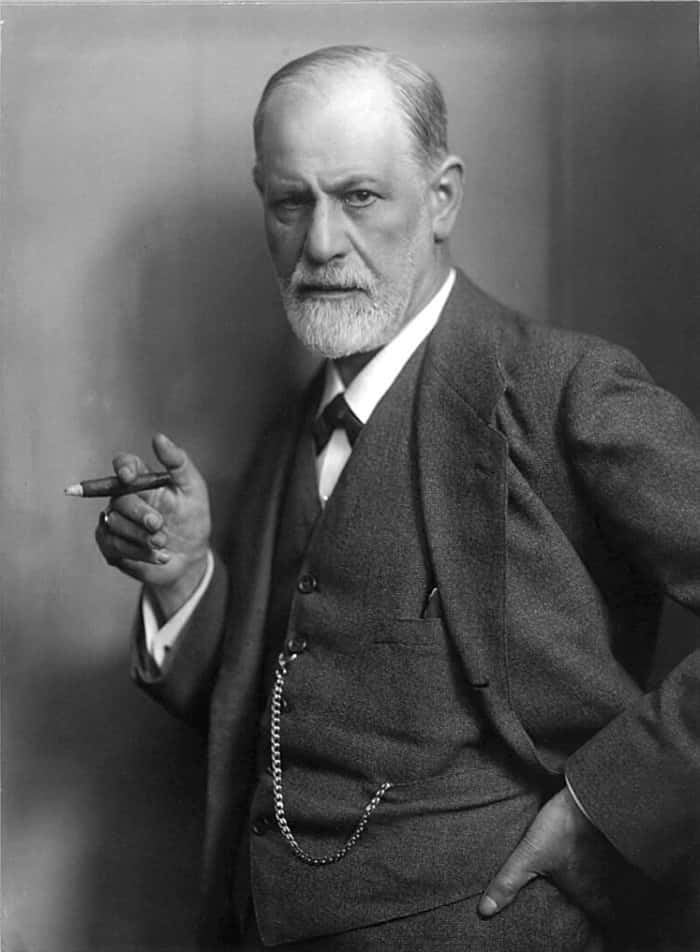
On May 6, 1856, the world welcomed Sigmund Freud — a figure who would go on to become one of the most celebrated neurologists in history. His groundbreaking theory of psychoanalysis and deep investigations into human personality and behavior secured his place in the intellectual canon. Freud devoted much of his professional life to unlocking the mysteries of the unconscious mind and mapping out the stages of psychosexual development. Remarkably, his ideas seeped so deeply into culture that they shaped the very words we use. Consider the phrase "Freudian slip" — a concept drawn from his psychoanalytic theory describing an unintentional error that exposes a person's hidden thoughts or desires, frequently sexual in nature.
Born in Freiberg, a town within the Austrian Empire, Sigmund Freud was the firstborn among eight children raised by Jewish parents. From an early age, he distinguished himself academically, earning a string of honors and accolades during his formative years of schooling. By 17, he had secured a place at the University of Vienna, ultimately completing his medical degree there in 1881. Following a period of work at the hospital, he made the decision to leave and establish a private practice focused on nervous disorders. For many years afterward, Freud threw himself into studying both the potential and the shortcomings of hypnosis as a treatment for various conditions, while simultaneously investigating the therapeutic value of talk therapy.
What truly cemented Sigmund Freud's enduring influence was his creation of the theory of psychoanalysis. Through extensive research and prolific writing, he crafted a therapeutic framework aimed at decoding human personality and behavior. Central to his work was the revolutionary idea of the "unconscious mind" — a hidden force, he argued, that shapes our impulses and reactions in profound ways. Beyond this, Freud was instrumental in advancing talk therapy as a means of fostering meaningful dialogue between patient and doctor to address mental health disorders. His intellectual contributions extend further still: he is widely recognized for his theories on the Oedipus Complex, his pioneering work in dream analysis, and his exploration of defense mechanisms like projection and repression — psychological tools the mind employs to shield itself from anxiety.
At 83 years old, Sigmund Freud succumbed to oral cancer in 1939. Yet despite the controversy that has sometimes surrounded his ideas, his discoveries, theories, and body of research remain a powerful force in shaping modern thought.