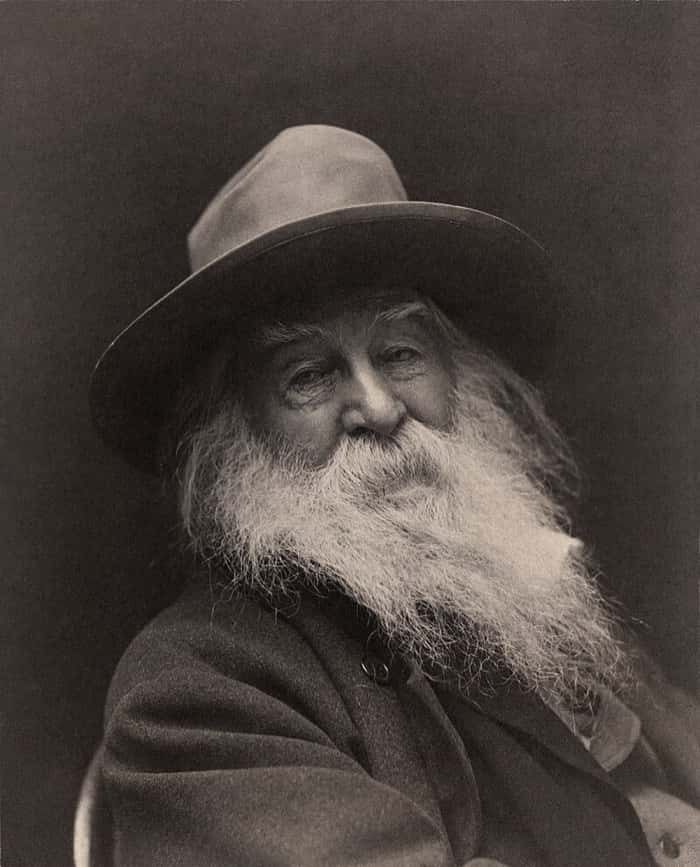
On May 31, 1819, in Long Island, New York, a literary giant entered the world — Walt Whitman, widely regarded as the Father of Free Verse. Some people wander through life trying to discover what makes them unique, but Whitman showed a remarkable aptitude for language from a very young age. Born as the second of nine children to Quaker parents, he grew up in a household that struggled financially. Those hardships forced him to leave school when he was just 11 years old so he could contribute to the family's income. His first job placed him in the office of two lawyers, where he picked up valuable typing and printing skills. Before long, he landed an opportunity writing short pieces for a local newspaper — an experience that ignited a deep love of writing he would carry with him for the rest of his life.
Throughout his career, Walt Whitman wore many hats: poet, essayist, and journalist. His crowning achievement was undoubtedly Leaves of Grass, a poetry collection he revised and republished no fewer than nine times over the years. What made his writing so extraordinary — and why it still resonates with readers today — was his ability to weave together transcendentalism, the philosophy that people and nature are inherently good, with literary realism. Beyond his thematic vision, Whitman became celebrated for pioneering free verse, a poetic form that shattered conventional rules and fundamentally reshaped the landscape of American poetry.
Fun Facts about Walt Whitman:
- Walt Whitman's strong personality and physical presence inspired the character of Dracula.
- He started his journey as a self-taught writer and journalist at the young age of 11. By 19, he founded his newspaper, The Long-Islander, which is still being published today!
- He was a Civil War volunteer and spent time nursing the wounded in hospitals.
- It is believed that Walt Whitman may have been gay, though he never formally came out. Many of his poems seem to allude to his homosexuality, making them controversial at the time.
- Though they never met in person, Abraham Lincoln was a hero of Walt Whitman. He wrote several poems and excerpts about the president, including the infamous "Oh, Captain, My Captain."