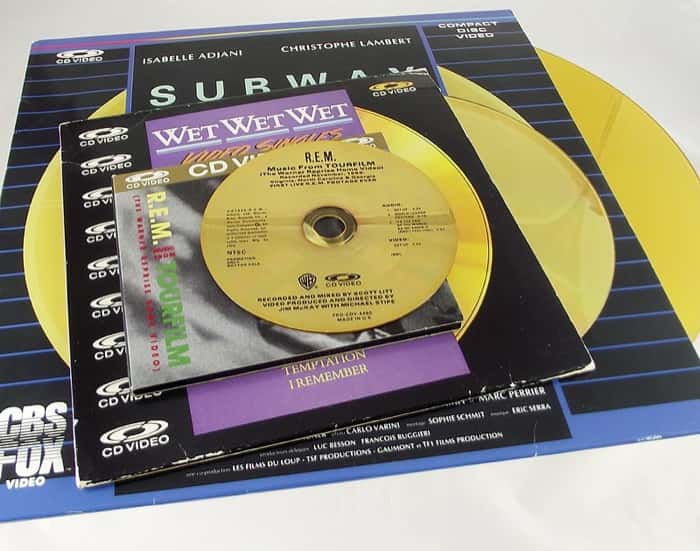
May 30, 1987, marked the day Philips pulled back the curtain on a largely forgotten piece of music tech: the Compact Disc Video. The idea behind it was straightforward — take the compact disc, already beloved for its convenience and popularity, and give it video capabilities. What they came up with was a disc that could store up to 20 minutes of audio alongside 5 minutes of analog video with sound sourced from LaserDisc.
It was a creative concept, no doubt, but the CD Video never really caught on with the masses. A big part of the problem? Playback was severely limited. You couldn't just pop a CD Video into your standard CD audio player and expect it to work. Instead, you needed either a dedicated CD Video player or a LaserDisc player, which meant consumers were forced to shell out for compatible hardware just to use the format.
On top of the compatibility headaches, there was the glaring issue of just 5 minutes of video — hardly enough for a full-length music video, let alone a show. Then there was the price tag. CD Videos didn't come cheap, and when you factored in the cost of new equipment required to play them, the total investment was enough to turn away young consumers — the very demographic most likely to want them. It didn't take long before the CD Video earned its reputation as a failed format, quietly disappearing after just a few short years.
Fun Facts about CD Videos:
- CDVs were gold in color to distinguish them from the silver audio CDs.
- CDVs were novel because they combined audio tracks with a few minutes of video tracks.
- Though they debuted in 1987, they were already considered a failed format a few years later.
- By 1990, CD videos had disappeared from the United States, but they remained popular in Japan until 1992.
- Philips launched the more popular Video CD in 1993.