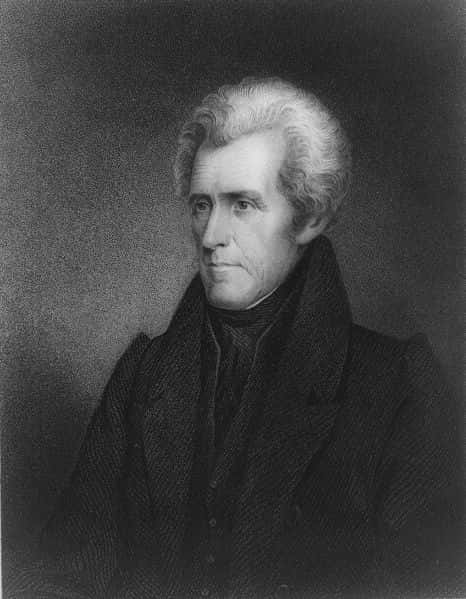
On May 28, 1830, President Andrew Jackson put his signature on the Indian Removal Act, turning it into federal law. The legislation's purpose was to push Native American tribes to lands west of the Mississippi River, thereby opening up their eastern territories for expanded white settlement and economic development. What followed was deeply consequential — roughly 60,000 Native Americans belonging to at least 18 distinct tribes were uprooted and sent to newly assigned territories.
Public sentiment at the time ran heavily in favor of the Indian Removal Act. Colonists held the conviction that Native tribes ought to assimilate into white civilization, viewing their own cultural practices as inherently superior and regarding Native Americans as savages. They also maintained that their system of property ownership carried greater legitimacy than the way Native Americans held and used land. The southern states were especially vocal champions of pushing into Native American territories, and Andrew Jackson made the case that westward expansion into Native lands would dramatically boost those states' populations, wealth, and economies. According to historians, Jackson saw the decline of Native American culture as something unavoidable, framing his relocation efforts as an act of mercy toward the tribes. The northern states mounted considerable opposition to the measure, but they ultimately lacked the votes, finding themselves outnumbered in both the Senate and the House of Representatives.
On paper, the Indian Removal Act granted the President authority to "negotiate terms" with Native Americans over land. The reality, however, was far harsher — forced relocation became the norm for many tribes. While some accepted what lay ahead and moved without resistance, others fought back against displacement. The most devastating example involved the Cherokee tribe, who were forced to march nearly 100,000 people westward in what became known as the Trail of Tears. Now widely recognized as a genocide, this harrowing episode claimed countless Native American lives through disease, starvation, and exposure. Together, the Indian Removal Act and the Trail of Tears stand as one of the most tragic chapters in American history.