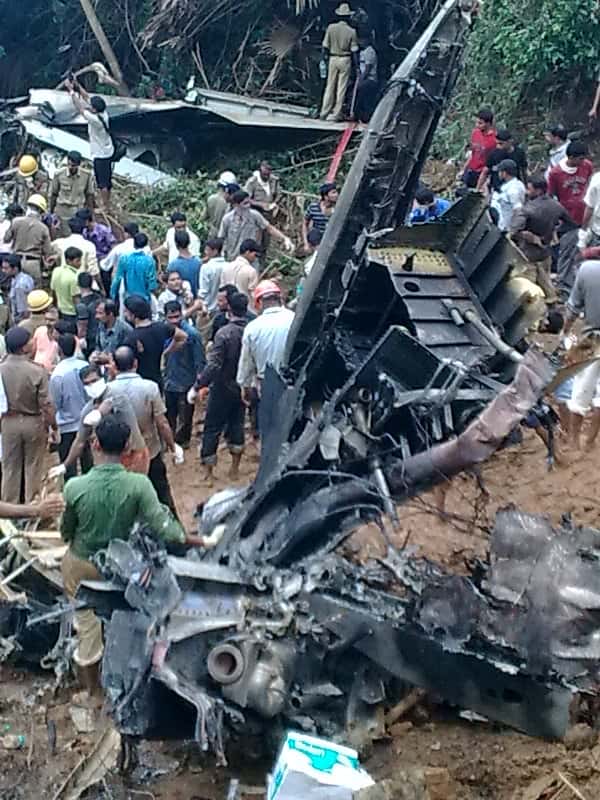
On May 22, 2010, disaster unfolded at Mangalore International Airport in India when Air India Express flight 812 burst into flames during landing. Aboard the aircraft were 166 people — 160 passengers and 6 crew members. Of those, only 8 survived; the crash claimed the lives of all 6 crew members along with 152 passengers. It remains the first and most catastrophic accident in Air India Express's history.
The doomed flight had originated from Dubai International Airport, bound for Mangalore International Airport. Its crew included Captain Zlatko Glusica as the pilot, a first officer, and four flight attendants. What makes Mangalore International Airport especially challenging is its classification as one of just seven "critical airfields" in India — a designation meaning pilots must handle both takeoff and landing without assistance. Compounding the difficulty, the airport is equipped with a "tabletop runway," where precise execution during landing is absolutely essential. Each of these conditions may have played a role in the catastrophe that followed.
Much has been debated about what exactly went wrong that day. Investigators ultimately determined that the primary cause was the pilot's use of what experts call an "unstabilized approach" — a scenario in which an aircraft comes in too high and too fast as it closes in on the runway. Despite three separate calls urging a "go around" to slow down and correct the descent, the pilot of flight 812 did not comply. The consequences were devastating: the plane overran the runway, plunged down a hill, and erupted in flames. Beyond the confirmed findings, there is also speculation that the pilot may have fallen asleep at some point during the flight.