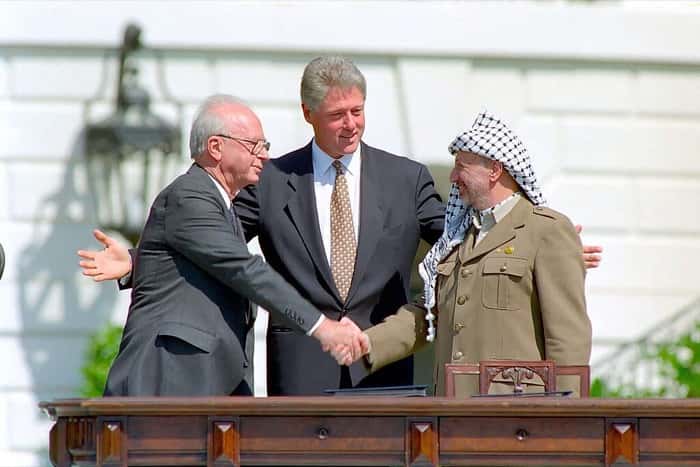
For decades, the Israeli-Palestinian conflict had been defined by bitter disputes over land control, security, and borders. Then, in 1993, the Oslo Accords emerged as a framework aimed at finally bringing peace between these two long-feuding nations. The agreement laid out a roadmap for both sides to end hostilities and formally acknowledge each other's right to exist. This process reached a pivotal moment on May 18, 1994, when Israel officially began pulling its forces out of the Gaza Strip and Jericho, handing governance of these territories over to the Palestinian Authority.
The Oslo Accords, introduced in 1993, were conceived as an ambitious five-year plan to defuse tensions across the Middle East. At their core, the accords called on both sides to renounce terrorism, created the Palestinian Authority as a governing body for the Palestinian people, and affirmed Israel's right to exist in peace. The hope was that this transitional framework would pave the way toward a durable, lasting peace before the five-year window closed. The signing took place in Washington, D.C., and the agreement encompassed mutual recognition of both Israel and Palestine as independent nations alongside the formal establishment of the Palestinian Authority. Under this arrangement, the Palestinian Authority took on responsibility for managing education, healthcare, and the economy within the areas it controlled, while Israel retained authority over security matters.
What unfolded in May 1994 proved essential to honoring the commitments made under the Oslo Accords. Central to the agreement was Israel's pledge to pull its military forces out of Jericho and the Gaza Strip, ceding authority over these regions to the Palestinian Authority. Known as either the Gaza-Jericho Agreement or the Cairo Agreement, this arrangement reached its culmination on May 18, 1994, when Israeli troops finished their withdrawal.
Despite the fact that numerous provisions of the Oslo Accords were put into practice, the agreements ultimately fell short of their promise — a permanent peace deal between Israel and Palestine never materialized. Israel held onto control of territories from which it had been expected to withdraw, and this became a major source of friction between the two sides. To this day, violence and conflict between them persist.