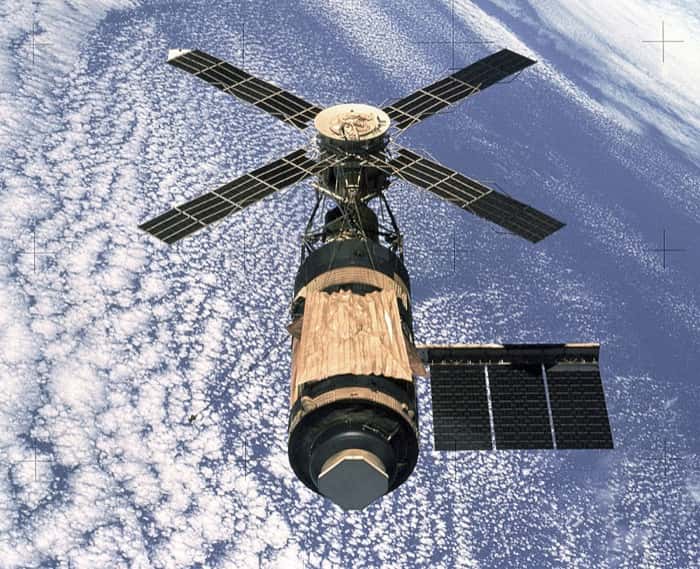
When the United States sent Skylab hurtling into orbit on May 14, 1973, it represented a bold new chapter in American space exploration — the nation's very first space station. Conceived as an orbiting laboratory, the NASA program envisioned it as a platform for carrying out hundreds of experiments and logging countless hours of observation. And it delivered. Crews aboard Skylab tackled groundbreaking work in biomedical sciences, astronomy, and how the human body adapts to zero gravity. On top of that, the station doubled as a solar observatory, amassing a wealth of data and research focused on the sun.
Unfortunately, Skylab's story didn't end the way anyone had hoped. Solar exposure and atmospheric drag took their toll, and by 1978, the station was gradually slipping out of orbit and beginning its slow fall back toward Earth. Efforts to boost it back into a stable orbit were initially on the table, but it quickly became clear that the time and funding required made such a rescue impractical. Those plans were ultimately scrapped. In 1979, Skylab made its fiery return through the Earth's atmosphere, breaking apart under the punishing forces of extreme heat and friction.
The dramatic reentry turned into a worldwide spectacle, commanding massive international media coverage. Thousands of onlookers tuned in from their homes, and many even wagered on exactly when and where the station would come down. On July 11, 1979, Skylab officially broke apart and scattered its remains across the Indian Ocean and sparsely populated areas of Australia.
Fun Facts about Skylab:
- The Skylab station was 118 feet long and weighed 170,000 pounds.
- Skylab had three different 3-man crews during its time in space, and these crews collectively occupied its workshop for 171 days and 13 hours.
- It was a site for over 300 technical and scientific experiments.
- It cost the United States $2.2 billion to build and maintain.
- The mission demonstrated that people could live and research in space for months at a time.