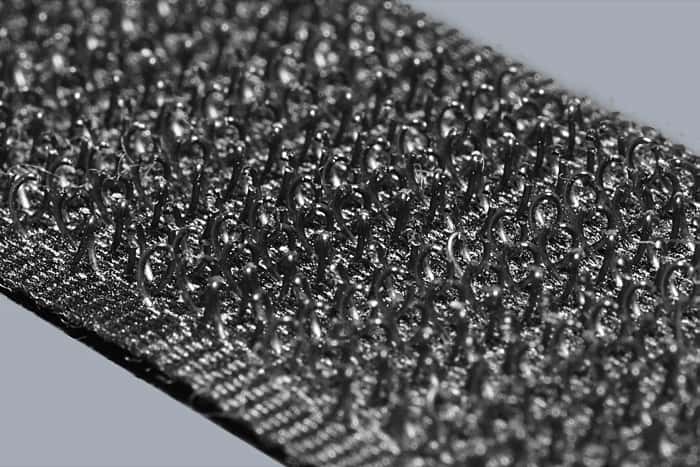
Most of us have had that maddening encounter with burs — those pesky, clingy "fruits" that latch onto everything from your socks to your hair. Picking them off one by one is an exercise in patience. Swiss engineer George de Mestral knew this frustration all too well, having dealt with it repeatedly while hunting with his dog in the Alps. One day, as he painstakingly plucked burs from his dog's fur, a lightbulb went off: what if the remarkable hook-and-loop mechanism these burs used could be recreated artificially? That flash of curiosity would eventually give rise to Velcro — a now-iconic fastening brand that received its trademark on May 13th, 1958.
Getting from concept to finished product, though, was anything but straightforward. When George de Mestral first pitched his hook-and-fastener idea to Lyon, France — the epicenter of the weaving world — he was met with rejection. Only a single weaver took a chance on the concept, collaborating with him to build a prototype out of cotton. The results were disappointing: the cotton fabric was far too fragile and started fraying within just days.
It became clear that a sturdier material was essential, and de Mestral turned his attention to synthetic fabrics, eventually settling on nylon. What followed was more than ten years of experimentation and refinement before his hook and fastener solution was ready for the world. He filed for his original patent in 1951 and received it in 1955. For the product's name, de Mestral blended two French words — "velours" (velvet) and "crochet" (hook) — to coin "Velcro," which he trademarked in 1958.
Fast forward to 2017, and the company found itself battling an unexpected problem: its own popularity. Velcro rolled out the "Don't Say Velcro" campaign to address the widespread habit of using their trademarked name as an adjective or verb. This kind of casual usage, the company argued, weakens the distinctiveness of the brand. Velcro has since urged consumers to reserve the term "Velcro" exclusively for the company itself, rather than applying it generically to describe other hook and fastener solutions.