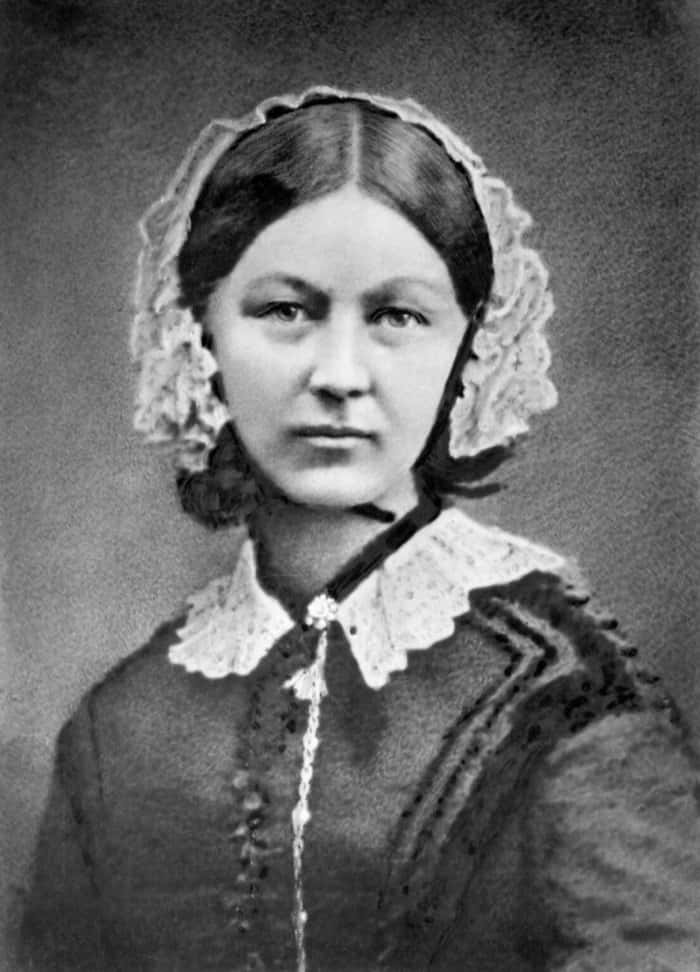
On May 12, 1820, a child was born who would go on to transform the medical world forever. Florence Nightingale became one of the most influential figures in nursing history, championing the professionalization of the field and placing compassionate care for the suffering at its very core. Her rise to prominence came during the Crimean War, where she not only served as a nurse but also managed and trained other nurses alongside her. Soldiers came to know her as "The Lady with the Lamp" — a nickname inspired by her unwavering commitment to tending to wounded men through the night, ensuring their comfort and relief from pain.
Born to a wealthy, intellectually distinguished family in Florence, Italy, Nightingale grew up in an environment where education was deeply valued. Her father took a particular interest in her intellectual development, and Florence thrived under that guidance. From an early age, she displayed a remarkable aptitude for gathering and analyzing data. Growing up in a devoutly religious home, she experienced what she believed was a calling from God — a divine purpose to spend her life easing the suffering of others. Given this foundation, her path toward medicine and nursing felt almost inevitable.
It was during her service in the Crimean War that Florence Nightingale left her greatest and most celebrated mark on the nursing profession. She threw herself into improving conditions for wounded soldiers, focusing on hygiene, sanitation, and proper nutrition. Thanks to her relentless work, a hospital in Turkey saw a dramatic drop in its death rate. Her efforts shone a light on the urgent, widespread need for well-organized, sanitary hospitals staffed by properly trained professionals. Many credit Nightingale with establishing nursing as a respected, credible profession. Following the war, she furthered her mission by establishing the Nightingale Training School for Nurses. Beyond her clinical work, she is also regarded as a trailblazer in applying statistics and data analysis to questions of public health and mortality. Her contributions ultimately drove numerous public health reforms.
A mysterious ailment known as "Crimean Fever" plagued Nightingale during her later years, leaving her largely confined to bed and grappling with depression. Even so, her determination never wavered — she kept pushing forward with social reform initiatives despite her declining health. She died in 1910 at the age of 90, yet the impact of her life's work endures, and her legacy in nursing remains a source of celebration to this day.