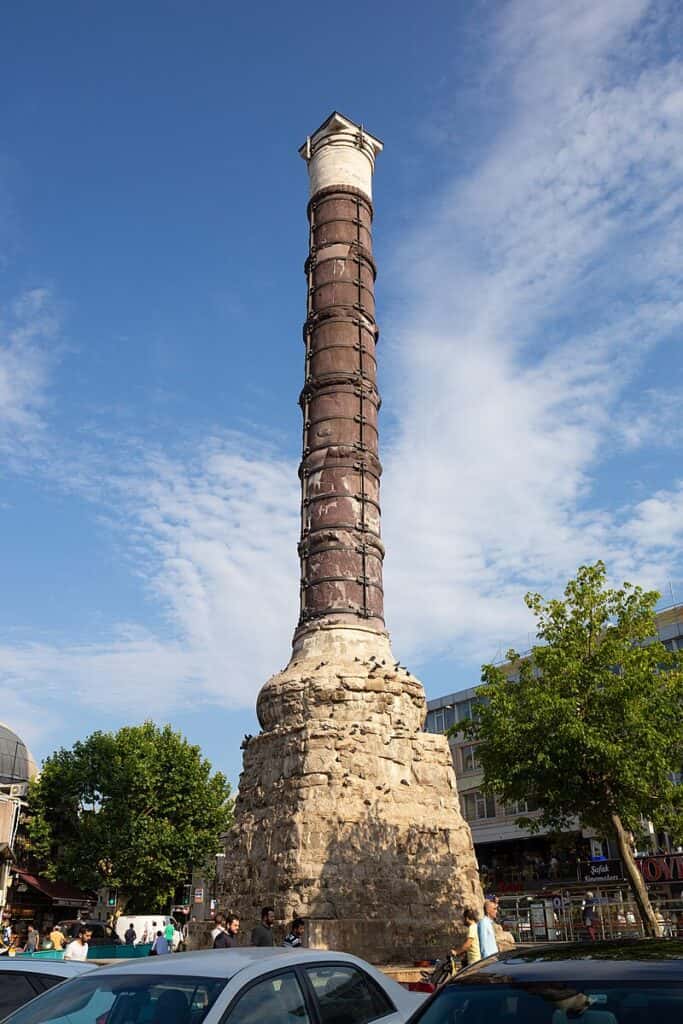
Few cities have left as deep an imprint on world history as Constantinople. It was in 324 AD that Emperor Constantine the Great established a new city in the region of Byzantium, initially calling it New Rome. Six years later, in 330 AD, he took the dramatic step of relocating the Roman Empire's capital away from Rome itself, bestowing his own name upon the city — Constantinople. Situated along the eastern edge of Europe, this new capital would rise to become the beating heart of the Eastern Empire. That landmark year of 330 AD is widely regarded as a turning point, ushering in an era of transformation and advancement for the Roman Empire.
Why uproot the capital of an entire empire? The reasoning behind the shift from Rome to Constantinople was deeply strategic. Perched along the Bosporus Straits, the city enjoyed a natural advantage — trade flowed more freely through its waters, and its geography offered superior protection from would-be invaders. Merchants from far and wide were drawn to these flourishing trade routes, flooding Constantinople with vast resources and wealth. Beyond commerce and defense, the relocation enabled the Empire to project its power further eastward, ultimately giving rise to the Eastern Empire. For more than a millennium, Constantinople reigned as the Empire's magnificent hub, standing firm until it finally fell to the Ottoman Empire in 1453.
Interesting Facts:
- Constantinople was the largest and wealthiest city in the Eastern Empire from the 4th to the 13th centuries.
- During its peak, the city was awarded many prestigious titles, including "The Queen of Cities," "The Great City," and simply "The City."
- Constantinople was renamed Istanbul in 1930 by the Republic of Turkey.
- Significant portions of the walls surrounding ancient Constantinople still stand today.