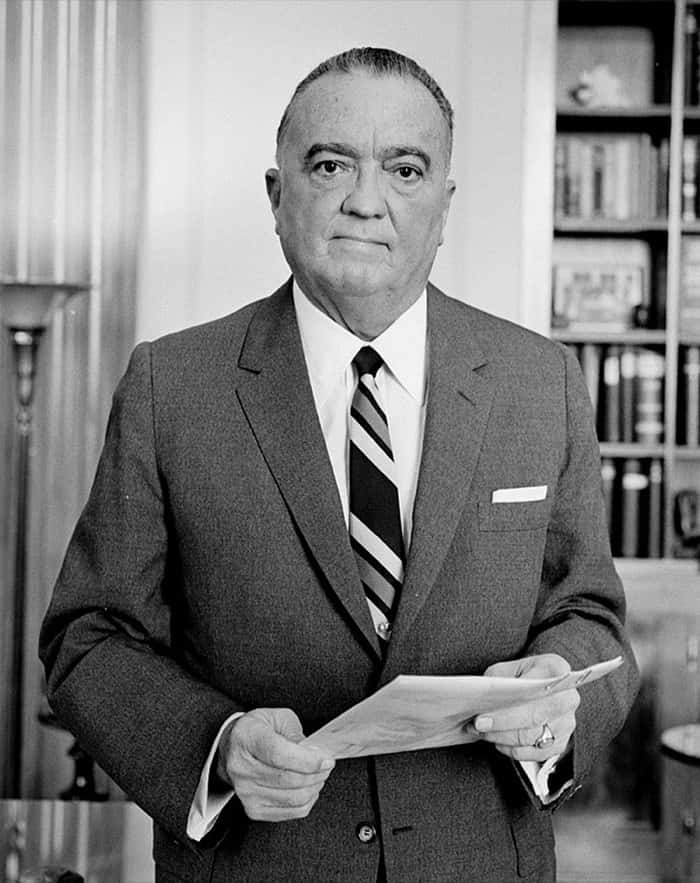
It was on May 10, 1924, that J. Edgar Hoover officially stepped into the role of FBI director — a position he would never relinquish. For an astonishing 48 years, right up until his death in 1972, he commanded the agency, serving under eight presidents and reshaping what had been a modest bureau into a formidable powerhouse of national influence.
Few figures in American history spark as much debate as J. Edgar Hoover. His career path took a surprising starting point: working as a librarian at the Library of Congress. From there, however, he climbed rapidly through the ranks of law and leadership at the Justice Department, accumulating remarkable influence within the United States. President Calvin Coolidge tapped him in 1924 to lead the Bureau of Investigation, the organization that would eventually evolve into the FBI. Interestingly, Hoover himself frequently pointed back to his librarian days as foundational to his investigative work, crediting that experience with teaching him how to collect and organize vast quantities of information and data.
The FBI grew at a remarkable pace under Hoover's stewardship, driven by his sharp leadership instincts. He championed the adoption of cutting-edge technologies like fingerprinting and forensic science, dramatically boosting the nation's crime-fighting capabilities. Beyond technological innovation, he also played a central role in creating the FBI blacklist — a systematic catalog of individuals and organizations that the United States considered untrustworthy.
As Hoover's life and career progressed, however, serious accusations of abuse of power began to surface. Critics charged him with weaponizing his authority to undermine political opponents for personal gain, conducting illegal surveillance and documentation of people he viewed as undesirable, and flouting the very policies the FBI was meant to uphold. These tactics allowed Hoover to consolidate enormous power and keep countless political figures in a state of intimidation. To this day, his legacy remains hotly contested. Many recognize his brilliance in developing and strengthening national security, along with his effective leadership — yet his well-documented abuses of power frequently cast a long shadow over those achievements.