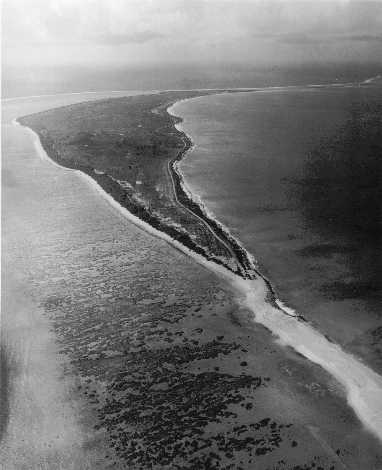
The morning of March 7, 1946, marked a turning point for the people of Bikini Atoll in the Marshall Islands, as the United States military set in motion the forced evacuation of the atoll's residents. What was happening was nothing less than the groundwork for a devastating series of nuclear tests — experiments that would reshape the island's destiny for decades to come.
Sometimes called Eschscholtz Atoll, Bikini Atoll stands out among the 23 islands that make up the Marshall Islands as a place of deep historical significance. Human presence on the island stretches back an astonishing 3,600 years, according to archaeological findings, making it a remarkable example of sustained habitation. Various groups settled there over the centuries, but perhaps the most consequential were the Japanese, who seized control in 1914 during WWI. Though governed under the South Seas Mandate, the islanders managed to preserve their distinct culture and traditional way of life throughout this period.
When WW2 erupted, Japan leveraged Bikini Atoll's strategic positioning, transforming it into a watch post designed to guard against American invasion. The island largely escaped the destruction of war until February 1944, when a fierce and bloody battle reduced the Japanese garrison to just five soldiers — all of whom chose suicide over capture. From that point on, Bikini Atoll functioned as a military site, and for six months the displaced islanders found themselves living in tents right beside a concrete runway built by the US Navy.
Through it all, the people of Bikini Atoll showed incredible resilience in the face of hardship. But peace brought no relief. Between 1946 and 1958, twenty-three separate nuclear tests were carried out on the atoll, and its 167 residents were uprooted to Rongerik Atoll in an effort to shield them from radiation exposure. Tragically, Rongerik proved far less fertile, and within two years the community was on the brink of starvation. Another move followed — this time to Kwajalein Atoll — and the islanders endured several additional relocations before finally making their way back to Bikini Atoll in 1970.
That homecoming proved short-lived. In September 1978, testing revealed dangerously elevated levels of cesium-137, a lethal form of radiation, on the island. Scientists declared Bikini Atoll unfit for habitation, and once again the people were forced to leave. The US has since acknowledged responsibility for the devastation and started paying reparations, yet health concerns and compensation disputes remain unresolved. Today, the 2,800 islanders and their descendants are scattered across Kili, Majuro and the US.