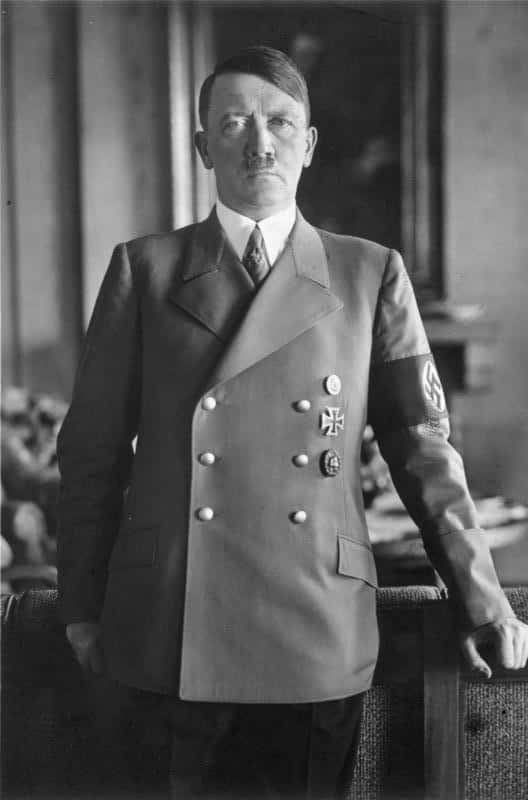
On March 7, 1936, Adolf Hitler took one of the most audacious gambles of his career. He sent 20,000 German troops marching into the Rhineland—a region that had been stripped of any military presence under the Treaty of Versailles. In doing so, he shattered both the Versailles Treaty (1919) and the Locarno Treaties (1925), two agreements specifically crafted to keep German aggression in check. And what did Britain and France, the only powers positioned to intervene, do about it? Absolutely nothing.
Bordering France, Belgium, and the Netherlands, the Rhineland held enormous strategic significance. Ever since World War I ended, no German soldiers had been permitted in the area. The Treaty of Versailles explicitly prohibited Germany from placing troops or constructing fortifications west of the Rhine River, and the Locarno Treaties, signed in 1925, reinforced these restrictions—with Germany's own consent. Hitler, however, had no intention of honoring those commitments. From the moment he seized power in 1933, he had been secretly rebuilding Germany's armed forces in direct defiance of the treaty. By 1936, he felt the time had come to see whether Britain and France actually had the will to enforce the rules.
That morning of March 7, 1936, German soldiers crossed the Rhine to the sounds of jubilant crowds welcoming them. It was an enormous risk. The German military remained far too weak for any real conflict, and Hitler had actually instructed his troops to pull back immediately if France chose to respond with force. But France never mobilized. Britain, still exhausted from the devastation of World War I, largely viewed the move as Germany simply 'marching into its backyard' and took no action whatsoever. This inaction had profound consequences—it left Hitler convinced that neither Britain nor France would ever stand in his way.
The failure to confront Hitler over this brazen treaty violation had consequences that Britain and France could scarcely have imagined. Interpreting the Western democracies as fundamentally weak, Hitler pushed his expansionist agenda even harder. In the years that followed, he would go on to annex Austria and press Czechoslovakia for control of the Sudetenland.
Could World War II have been stopped right then and there in 1936? Many historians believe so. German generals later confessed that a military response from France and Britain would have left them with no option but to withdraw. Instead, the lack of opposition fueled Hitler's confidence—and set the world on an unstoppable path toward catastrophe.