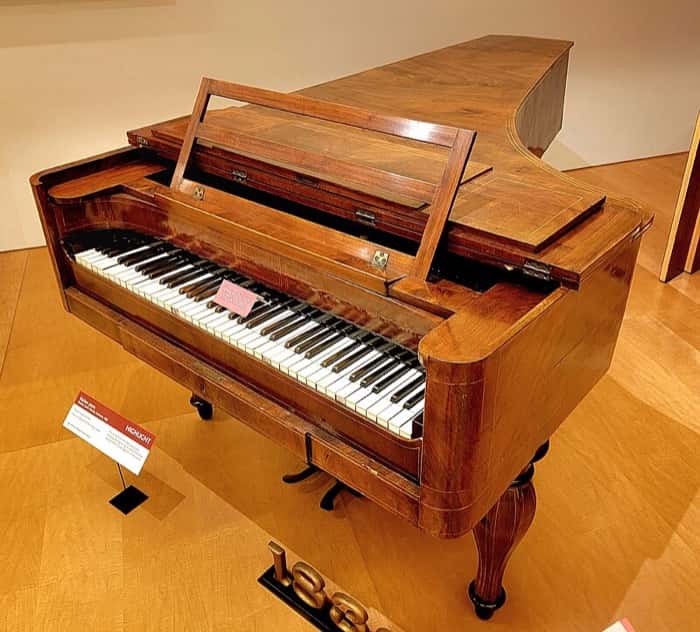
It all started on March 5, 1853, when Heinrich Engelhard Steinweg—a German immigrant who would come to be known as Henry E. Steinway—launched Steinway & Sons in Manhattan, New York. His ambition was bold yet beautifully straightforward: build the greatest piano the world had ever seen. From humble beginnings as a small workshop, the enterprise would grow into one of the most revered piano manufacturers on the planet.
The story really begins back in Germany, where Heinrich Engelhard Steinweg meticulously constructed his very first piano at home. A desire for bigger opportunities drove him to emigrate to the United States in 1850, bringing along decades of hard-won expertise and a relentless dedication to perfection. It took three years before he opened Steinway & Sons in a modest loft at 85 Varick Street. Notably, the first piano bearing the Steinway name wasn't actually his first creation—it was number 483, since he had already built 482 pianos back in Germany. That instrument fetched $500, and with it, the Steinway legacy was born.
Innovation and exceptional quality quickly became synonymous with Steinway & Sons. The company secured numerous patents by the late 19th century, transforming piano construction through breakthroughs in sound quality, durability, and mechanics. Recognition came from both home and abroad, with the firm collecting over 30 gold medals at exhibitions around the world.
Growing demand pushed Steinway to scale up operations. The company relocated to a larger facility in 1864 and eventually constructed a second factory in Hamburg, Germany, catering specifically to European markets. Remarkably, this dual production model persists to this day—the New York factory serves the Americas while the Hamburg factory handles the rest of the world. Legendary musicians spanning generations, from Sergei Rachmaninoff to Billy Joel, made Steinway their piano of choice. The company also opened Steinway Hall in 1866, a prestigious concert venue in New York City that served as the home of the New York Philharmonic for over 25 years.
When World War II arrived, Steinway & Sons showed its patriotic spirit by manufacturing Victory Vertical pianos—compact instruments purpose-built for soldiers in the field. These pianos were dropped into combat zones, offering troops a vital source of comfort and entertainment. It was a powerful testament to the company's adaptability and sense of social responsibility.
More than 170 years after Heinrich Engelhard Steinweg first hung his shingle, Steinway & Sons stands as the gold standard in piano craftsmanship. Every instrument is still handcrafted with the same painstaking attention to detail that defined Henry Steinway's original vision.