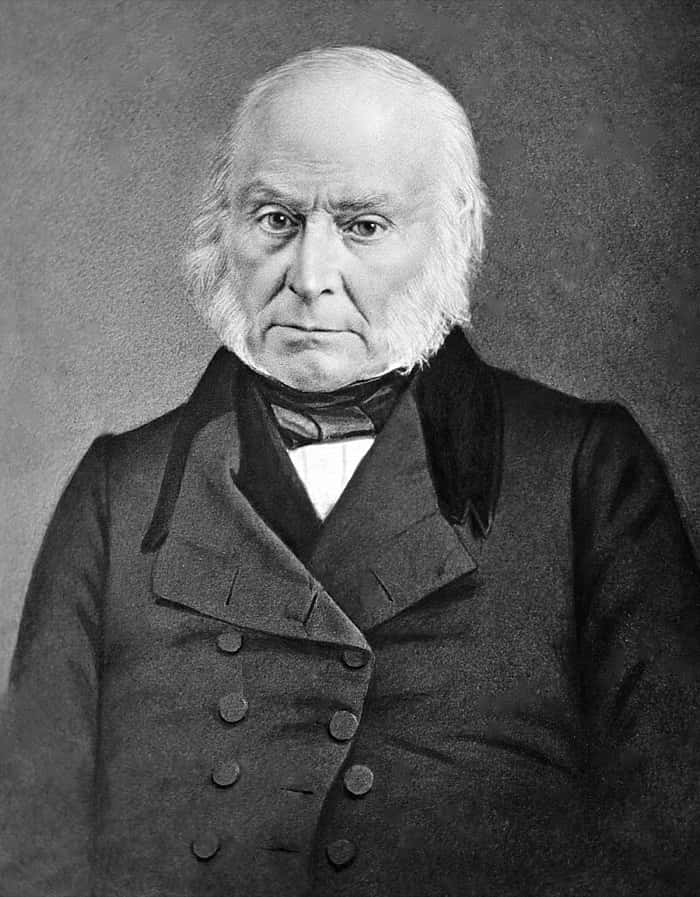
After leaving the presidency, John Quincy Adams made a remarkable return to political life by winning a seat in the House of Representatives on March 4, 1830. No former president had ever gone back to serve in the House after occupying the White House, making this a truly unprecedented moment in the nation's history. His path to Congress came after Andrew Jackson defeated him in the 1828 presidential contest, yet rather than retreating from public life, he channeled his energy into legislative service despite that loss. When he was sworn in on March 4, 1831, John Quincy Adams cemented his place as the first ex-president to launch a congressional career following his time in the nation's highest office.
Before arriving in Congress, John Quincy Adams had built an extensive career in law and diplomacy. His prior public service included two particularly prominent roles: leading the country as president from 1825 to 1829 and representing Massachusetts in the Senate from 1803 until 1808. When his bid for a second presidential term fell short, he stepped back into the political arena in 1830, representing the Plymouth constituency of Massachusetts, situated in the southeastern portion of the state. Once in Congress, he turned his attention to pressing national issues, championing civil liberties while simultaneously waging a determined fight against the institution of slavery.
Among the most enduring aspects of Adams' legacy is his fierce defense of civil rights. He emerged as one of Congress's most vocal critics of slavery during his time in the House. Perhaps nothing better illustrates his dedication than his tireless campaign to overturn the 'gag rule' — a measure enacted in 1836 that prohibited the House from even considering petitions that opposed slavery. The eloquence and force of his anti-slavery speeches were so striking that contemporaries bestowed upon him the nickname 'Old Man Eloquent,' a moniker that spoke volumes about the real-world influence of his words.
By choosing to re-enter government, Adams revealed a deep-seated belief that public service represented not a temporary duty but a lifelong calling. Throughout his years in Congress, he threw his weight behind causes like national unity, infrastructural development, and the advancement of education. He remained an influential force in American politics right up until the very end. On February 21, 1848, Adams suffered a stroke and collapsed on the House floor. Two days later, on February 23, 1848, he died within the walls of the US Capitol. His enduring legacy — as an abolitionist, a dedicated public servant spanning decades, and a politician guided by principle — continues to inspire future generations.