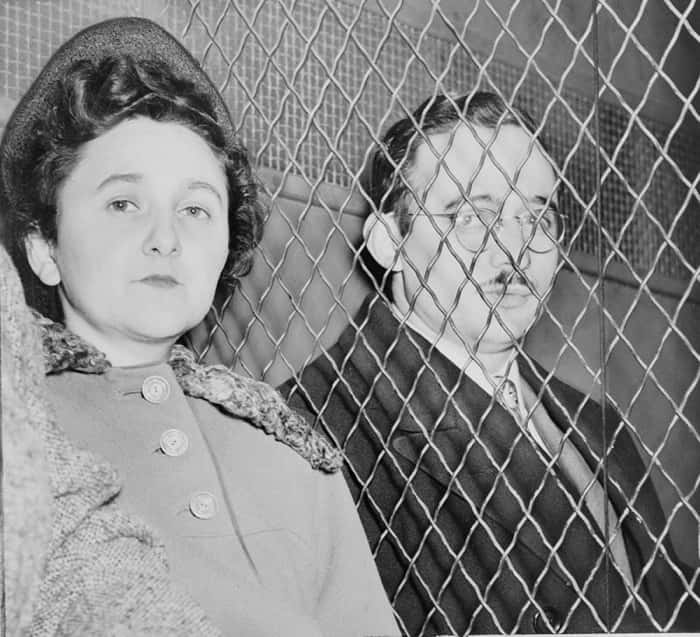
What happened when Julius and Ethel Rosenberg faced a jury on March 29, 1951? They were found guilty of conspiracy to commit espionage on behalf of the Soviet Union — a verdict that would seal their fate and ignite one of the Cold War's fiercest debates. Their subsequent execution in 1953 marked a grim milestone: they became the first American civilians put to death for espionage during peacetime.
The Rosenbergs, a married couple living in New York, stood accused of funneling classified military secrets to the Soviets both during and after World War II. The information allegedly handed over was staggering in scope — top-secret intelligence on nuclear weapons, radar, sonar, and jet propulsion technology. Central to the government's case was the testimony of David Greenglass, Ethel's own brother, who had worked as an Army machinist at the Los Alamos Laboratory, the birthplace of the atomic bomb. According to Greenglass, he had given Julius handwritten notes and sketches detailing nuclear bomb designs, which Julius then passed along to Soviet agents.
The Trial and Conviction
For nearly a month, the case unfolded in the U.S. District Court for the Southern District of New York, with Judge Irving Kaufman on the bench and Irving Saypol spearheading the prosecution's efforts. Prosecutors portrayed the Rosenbergs as pivotal players within a Soviet spy network. Their defense attorney, Emanuel Bloch, pushed back forcefully, contending that the evidence was flimsy and that anti-Communist hysteria was the true engine driving the proceedings. None of it swayed the jury, which delivered a guilty verdict on March 29, 1951. Just a week later, on April 5, 1951, Judge Kaufman handed down the death sentence, declaring that the Rosenbergs had hastened Soviet nuclear capabilities and played a role in triggering the Korean War.
Public Outcry and Execution
Outrage erupted around the world in response to the verdict. Prominent voices — intellectuals, activists, and towering figures such as Albert Einstein, Pablo Picasso, and Pope Pius XII — called on President Dwight D. Eisenhower to show mercy. The government stood firm, however, convinced that carrying out the executions would send a powerful deterrent message to would-be spies. On June 19, 1953, both Rosenbergs met their end in the electric chair at Sing Sing Prison in New York. Julius was killed instantly. Ethel's death proved far more harrowing — she required multiple electrical shocks, and witnesses reported that smoke rose from her head.
Reevaluating the Case
The passage of time brought revelations that reshaped the narrative. Declassified Soviet documents eventually confirmed Julius's involvement in espionage, yet they offered scant evidence that Ethel had played an active part. Then, in 2001, David Greenglass made a stunning admission: he had fabricated testimony about Ethel's role in order to shield his own wife.
The Rosenberg trial endures as a potent symbol of Cold War paranoia — a case that continues to provoke urgent questions about justice, due process, and the role of political motivations in the courtroom.