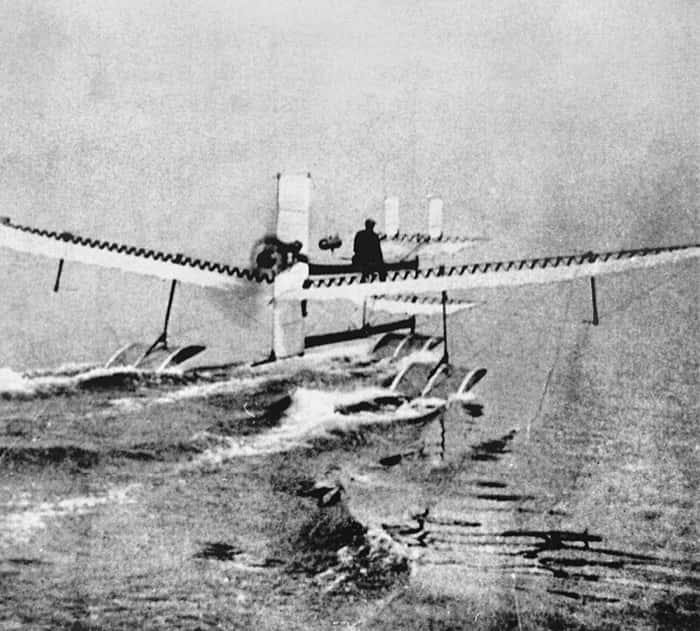
Imagine telling someone two centuries ago that a metal contraption could soar through the sky — over solid ground, no less over open water. They'd have called it pure fantasy, or worse. Yet that's precisely what Henri Fabre, a French engineer and aviator, pulled off on March 28, 1910. On that remarkable day, he climbed into his creation, the Fabre Hydravion, and lifted off from the waters near Marseille, becoming the first person to successfully pilot a seaplane in France. It was a breathtaking moment of human ingenuity — one that would lay the foundation for seaplanes destined to transform transportation, military operations, and exploration for generations to come.
The Fabre Hydravion itself was an elegantly simple machine. Built with wooden floats that enabled it to launch from and touch down on water, this lightweight aircraft was purpose-built for its aquatic mission. Henri Fabre chose the waters near Étang de Berre, a lagoon close to Marseille, as his proving ground, and the craft traveled a distance of about 500 meters during that historic flight.
What made the Fabre Hydravion truly remarkable was that it wasn't merely a singular stunt — it unlocked an entirely new dimension of aviation. Water-based flight suddenly had a proven concept, and the world took notice. By the time World War I erupted, seaplanes had already become indispensable tools for reconnaissance and transportation. Their legacy endures well into our own era, where seaplanes remain vital for specialized tasks like firefighting, rescue operations, and delivering supplies to remote locations. The mark Henri Fabre left on modern aviation runs deep, a powerful reminder of what one person's pioneering spirit and relentless innovation can achieve.
Fun Facts:
- The Fabre Hydravion was the first seaplane to take off successfully.
- The flight occurred near Étang de Berre, France.
- Henri Fabre designed, built, and piloted the aircraft himself.
- The plane traveled about 500 meters during its first flight.
- Seaplanes later became essential for military and commercial aviation.
From a humble wooden aircraft skimming across a French lagoon to the sophisticated amphibious planes of today, Henri Fabre's pioneering achievement truly opened a bold new chapter in the story of aviation.