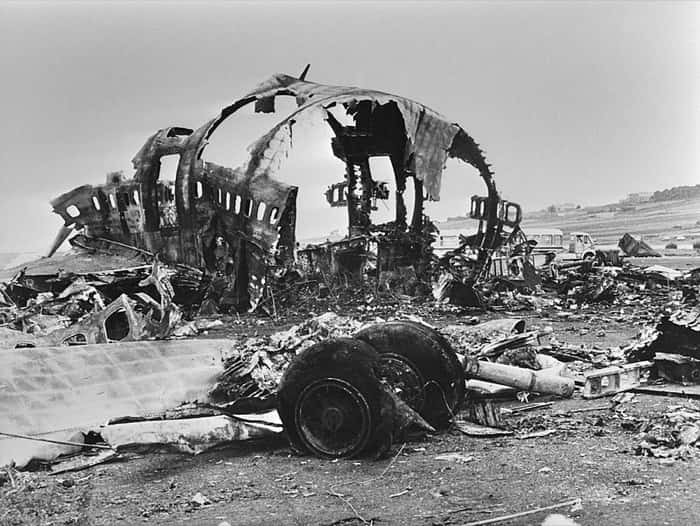
On March 27, 1977, what would become the deadliest accident in aviation history took place at Los Rodeos Airport — today called Tenerife North Airport — situated in Spain's Canary Islands. Two Boeing 747 jumbo jets collided on the runway that day, claiming 583 lives in a catastrophe that still stands unmatched in its scale.
Thick fog had severely reduced visibility at the airport when the disaster struck. Both a KLM Royal Dutch Airlines 747 and a Pan American World Airways 747 found themselves grounded at Los Rodeos after a bomb threat diverted them from their intended destination, Gran Canaria Airport. Miscommunication between ground controllers and the flight crews of both aircraft set the stage for catastrophe. The KLM 747, its crew convinced they had received takeoff clearance, powered down the runway — completely unaware that the Pan Am 747 was still taxiing along the same stretch of tarmac ahead of them. By the time the Pan Am crew caught sight of the oncoming plane, there was simply no time to react. The KLM jet had already committed to its takeoff roll when it slammed into the Pan Am aircraft, triggering a massive explosion.
Every single person aboard the KLM flight perished — all 248 passengers and crew members. On the Pan Am side, 335 passengers and crew lost their lives. Remarkably, sixty-one people from the Pan Am aircraft managed to escape the blazing wreckage and survive.
In the wake of the Tenerife Airport Disaster, the aviation world undertook sweeping reforms that fundamentally transformed how safety was managed:
- Standardized phraseology was adopted across the industry for all exchanges between pilots and air traffic controllers, drastically reducing the chance of miscommunication.
- Cockpit resource management practices were overhauled, requiring crew members to actively challenge their colleagues' decisions whenever uncertainty arose.
- Airport safety procedures received significant upgrades, especially for operations conducted in foggy conditions.
The lessons drawn from the Tenerife Airport Disaster serve as a powerful reminder of how vital clear communication and strict adherence to safety protocols are in aviation. The reforms born out of this tragedy continue to shape and safeguard commercial air travel to this day.