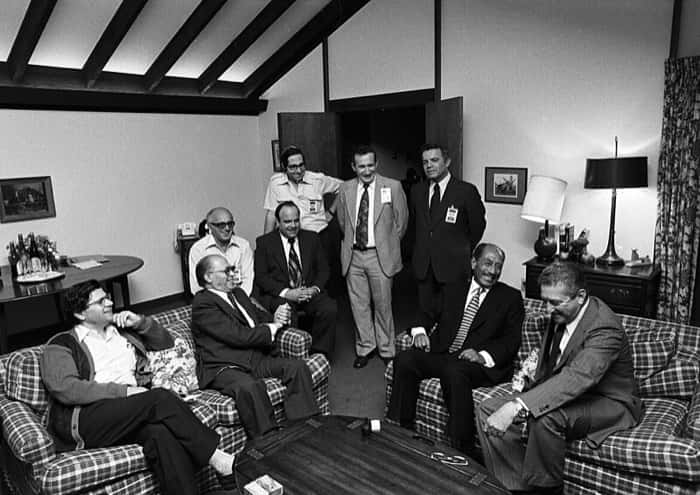
What happened on March 26, 1979, reshaped the geopolitical landscape of the Middle East in ways few could have imagined. On that day, Egypt and Israel put pen to paper on a peace treaty in Washington, D.C., drawing the curtain on decades of bitter enmity. This landmark deal didn't emerge overnight—it was the product of painstaking diplomacy that grew out of the Camp David Accords of 1978, with U.S. President Jimmy Carter serving as the driving force behind the negotiations.
To understand the significance, consider this: for over 30 years, Egypt and Israel had been locked in fierce opposition. Tensions boiled over during the Six-Day War of 1967, when Israel captured the Sinai Peninsula—a strategically vital piece of Egyptian territory. Diplomatic efforts to resolve the situation went nowhere, and the result was yet another armed confrontation: the Yom Kippur War of 1973, a conflict that saw Syria and Egypt mount a surprise offensive against Israel.
It became clear that a durable peace was essential. Egyptian President Anwar Sadat and Israeli Prime Minister Menachem Begin entered into negotiations, with U.S. President Jimmy Carter playing an indispensable role as mediator. Over 12 days of closely guarded, intense discussions at Camp David, Maryland, the three leaders hammered out a path forward, culminating in two agreements signed on September 17, 1978:
- A Framework for Peace in the Middle East, which addressed Palestinian autonomy.
- A Framework for the Conclusion of a Peace Treaty between Egypt and Israel led to the treaty on March 26, 1979.
The 1979 Peace Treaty
Several critical provisions formed the backbone of the Egypt-Israel Peace Treaty:
- Mutual Recognition: Egypt made history as the first Arab country to officially recognize Israel.
- Israeli Withdrawal: Israel committed to handing the Sinai Peninsula back to Egypt over a three-year period.
- End of Hostilities: A mutual pledge was made that neither nation would wage war against the other again.
- Freedom of Navigation: Israel secured access to key waterways, among them the Suez Canal.
Reaction and Consequences
While the treaty broke new ground, it also ignited fierce controversy across the region. A wave of Arab nations denounced Egypt, seeing the agreement as an abandonment of Palestinian interests. The backlash was severe—Egypt found itself suspended from the Arab League from 1979 to 1989, a steep political price to pay. Most devastatingly, Anwar Sadat paid with his life, assassinated in 1981 by extremists who viewed the peace deal as unforgivable.
Yet despite the turbulence that followed its signing, the treaty has endured to this day, standing as powerful proof of what diplomacy can achieve. It remains among modern history's most resilient peace agreements and helped pave the way for subsequent breakthroughs, including the Oslo Accords (1993) and the Israel-Jordan Peace Treaty (1994).