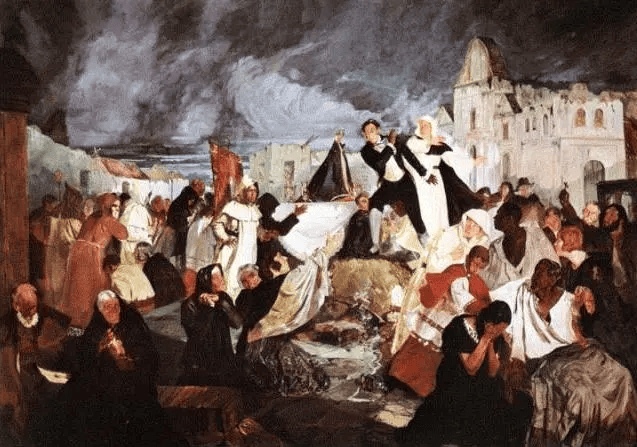
On March 26, 1812, a devastating 7.7-magnitude earthquake tore through Caracas, Venezuela, reducing a staggering 90% of the city to rubble and claiming the lives of an estimated 15,000 to 20,000 people. Falling on Maundy Thursday, this catastrophe ranks among the deadliest seismic events in South American history.
At 4:37 PM, a powerful seismic shock rippled across northern Venezuela, unleashing widespread destruction in several cities—Caracas, La Guaira, Barquisimeto, San Felipe, and Mérida among them. Thousands were buried alive as buildings crumbled in an instant. The timing proved especially tragic in Caracas, where Holy Week services had drawn crowds of worshippers into churches that collapsed around them, driving the death toll even higher. Such was the earthquake's sheer power that a new lake formed in Valecillo and the Yurubí River found itself completely blocked. Throughout the Caracas valley, waterways shifted from their natural paths, sending muddy water surging through the streets. Survivors described two enormous tremors striking within a span of 30 minutes, with the second wave unleashing further devastation on Mérida, where heavy rainfall compounded the already dire situation.
This disaster arrived at a particularly volatile moment—right in the thick of the Venezuelan War of Independence. Spanish royalists quickly moved to weaponize the tragedy against the independence movement. Archbishop Narciso Coll y Prat declared that the earthquake represented divine retribution for Venezuela's defiance of Spanish rule, while the Gazeta de Caracas went so far as to propose relocating the capital given the extent of the destruction. Simón Bolívar, the revolution's leader, flatly rejected such claims. His now-legendary declaration—"If Nature is against us, we shall fight Nature and make it obey"—served as a powerful rallying cry that galvanized the independence movement.
In the earthquake's aftermath, the United States took an unprecedented step in foreign relations by extending its first-ever international aid. Five ships loaded with flour were sent to Venezuela by the U.S. Congress, marking a landmark early example of American humanitarian assistance beyond its own borders.