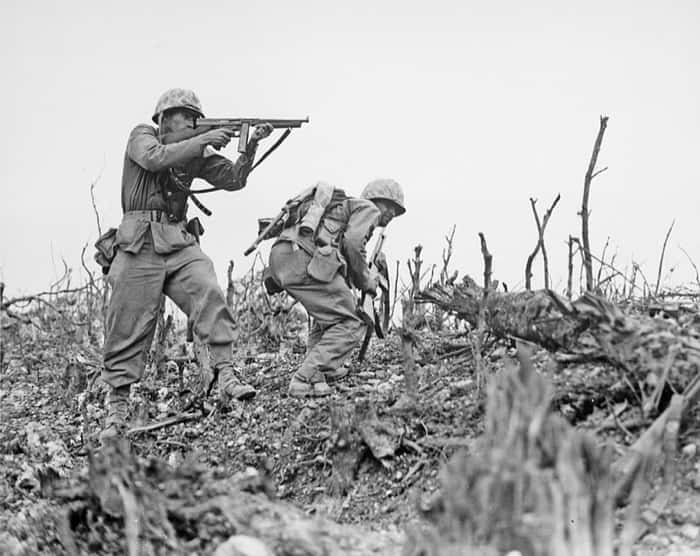
The Battle of Okinawa kicked off with a massive barrage of naval and aerial firepower on March 23, 1945, setting the stage for U.S. ground forces to storm the island on April 1, 1945. What followed would become the largest and deadliest amphibious engagement in the entire Pacific theater of World War II. Over the course of three months, this brutal clash between Allied and Imperial Japanese Army forces played a pivotal role in shaping the war's conclusion.
Sitting just 340 miles south of mainland Japan, the small island of Okinawa carried enormous strategic weight for both sides of the conflict. For the Allies, capturing Okinawa meant securing a critical staging ground for a direct invasion of Japan itself. For the Japanese, it represented their last line of defense — losing it could mean losing everything. Allied forces unleashed a punishing combination of naval bombardment and air strikes starting on March 23, 1945, before U.S. troops hit the beaches of Okinawa Island on April 1st. Meanwhile, Japanese defenders had transformed the island into a fortress, riddling it with elaborate tunnel systems, cave strongholds, and concealed underground artillery emplacements — all of which contributed to a drawn-out and devastatingly lethal struggle.
Intense combat, staggering losses, and widespread devastation defined the Battle of Okinawa from start to finish. Japanese forces mounted ferocious resistance, unleashing kamikaze strikes on Allied vessels, while American soldiers found themselves battling determined defenders across brutally unforgiving terrain. Tragically, Okinawan civilians were swept up in the carnage — many were pressed into combat, exploited as human shields, or driven to mass suicides by Japanese propaganda.
By the time fighting concluded on June 22, 1945, the human toll was heartbreaking. American forces suffered 12,500 killed, while Japanese military losses reached 94,000 soldiers. Okinawan civilian deaths are estimated at between 100,000 and 150,000. When the guns finally fell silent, Okinawa itself lay in ruins — its infrastructure obliterated and its communities shattered beyond recognition.
The Battle of Okinawa is remembered today as a stark testament to the darkest extremes of warfare and a solemn tribute to the island's population, who endured unimaginable suffering. Across Okinawa, memorials and museums stand as enduring tributes to those who perished, while carrying forward a powerful message of peace and coexistence.