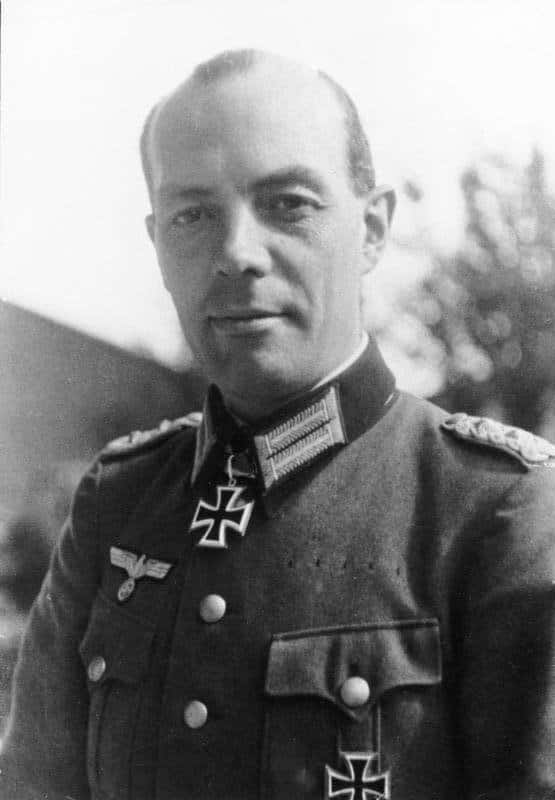
What if one man's willingness to die could have changed the entire course of World War II? On March 21, 1943, that scenario nearly became reality. Rudolf Christoph Freiherr von Gersdorff, a member of the German resistance, got closer to killing Adolf Hitler than almost anyone else ever did. He had smuggled explosives into his coat and was fully prepared to give his own life to destroy the Führer. Yet Hitler, with his almost eerie knack for dodging even the most meticulously crafted assassination schemes, walked away unscathed.
The location chosen for this daring plot was the Zeughaus, Berlin's storied army museum. A tour of captured Soviet weapons had been arranged, and Hitler was expected to attend alongside senior Nazi leaders such as Hermann Göring, Heinrich Himmler, Wilhelm Keitel, and Karl Dönitz. Germany's fortunes in the war were deteriorating, and internal opposition to the Nazi regime was growing. As a high-ranking officer, Gersdorff was tapped to guide the group through the exhibition. Recognizing this as a rare opportunity, he stepped forward for what was essentially a suicide mission. Concealed in his coat pockets were two bombs equipped with ten-minute delayed fuses, designed to explode when he embraced Hitler. The concept was straightforward: the moment Hitler showed up, Gersdorff would activate the fuses and ensure both he and the dictator perished together.
Everything hinged on Hitler lingering in the museum for at least ten minutes—long enough for the bombs to detonate. True to form, though, Hitler defied expectations. Rather than carefully examining the displays, he blew through the entire tour in under ten minutes and was gone before the fuses could do their work. Thinking fast, Gersdorff rushed to the bathroom and managed to defuse the bombs with barely any time to spare. Had anyone discovered what he was doing, execution would have been inevitable. Remarkably, he escaped without arousing suspicion. The botched plot didn't break the resistance's resolve, and Gersdorff pressed on with his anti-Nazi efforts. Still, it would be another 16 months before a comparably serious assassination attempt materialized—the July 20, 1944, bombing orchestrated by Claus von Stauffenberg—which also came agonizingly close to ending Hitler's life.
The plot of March 21 stands as yet another instance in which Hitler barely cheated death. More importantly, it underscored the extraordinary bravery of German resistance members who put everything on the line in their effort to bring down one of history's most notorious dictators.