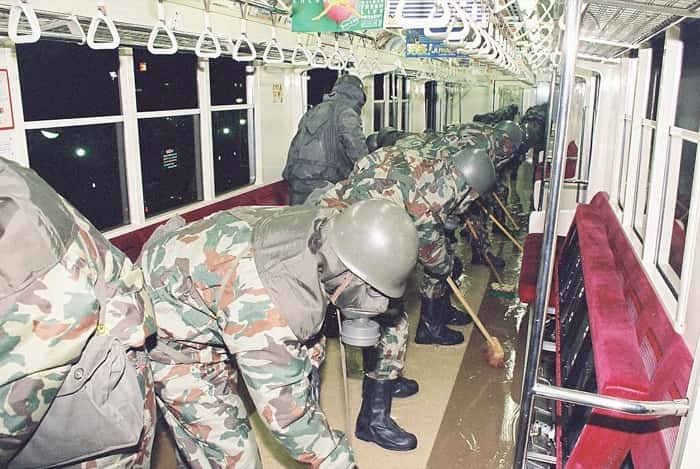
Among the darkest chapters in modern history, the assault carried out by members of Aum Shinrikyo on March 20, 1995, in Tokyo, Japan, stands as one of the most devastating acts of terrorism ever recorded. Cult members released the deadly nerve agent sarin across five subway trains during the morning rush hour. What unfolded was a suicide attack on some of Tokyo's most heavily trafficked transit lines, claiming thirteen lives, injuring more than six thousand others, and plunging the entire city into a state of chaos and terror.
The operation, orchestrated by the cult under the leadership of Shoko Asahara, was executed with meticulous planning. Liquid sarin was concealed inside plastic bags wrapped in newspaper, which cult members smuggled aboard the trains. At predetermined subway stations, they punctured the bags using sharpened umbrella tips, unleashing the toxic gas into crowded train compartments. As a banned chemical weapon, sarin acts swiftly on the human body, inducing fatal respiratory distress and paralysis in those who come into contact with it. The selection of subway routes was no accident — each line converged at Kasumigaseki Station, situated near key government buildings, signaling a deliberate intent to strike at Japan's political and administrative heart. When the attack hit, emergency services were quickly overwhelmed, with hospitals scrambling to treat thousands of victims suffering from symptoms including blurred vision, nausea, and severe breathing difficulties.
Rising to prominence during the 1980s, Aum Shinrikyo built its ideology around a blend of Buddhism, Hinduism, and apocalyptic prophecy. Shoko Asahara, the group's leader, preached that the end of the world was imminent and that only his followers would survive the coming destruction. This apocalyptic vision, backed by substantial financial resources and scientific expertise, allowed the cult to develop a sophisticated chemical weapons program — one capable of producing sarin gas. The Tokyo subway attack was not, however, their first act of violence. In 1994, the group had already unleashed sarin in Matsumoto, Japan, killing eight people and hospitalizing hundreds more in what amounted to their inaugural chemical assault. Yet the 1995 operation would prove to be the most catastrophic strike in the cult's entire campaign of terror.
The shockwaves from the Tokyo sarin attack reverberated across Japan and around the globe, exposing critical vulnerabilities in both public safety infrastructure and emergency preparedness. In response, Japanese authorities launched a sweeping nationwide crackdown, arresting hundreds of individuals connected to the group. Among those brought to justice was Shoko Asahara himself, the leader of Aum Shinrikyo, who was executed in 2018. Today, memorials and annual commemorations continue to honor those affected — paying tribute to the victims and standing in solidarity with survivors who still grapple with lasting health consequences, while serving as sobering reminders of the ever-present nature of such threats.