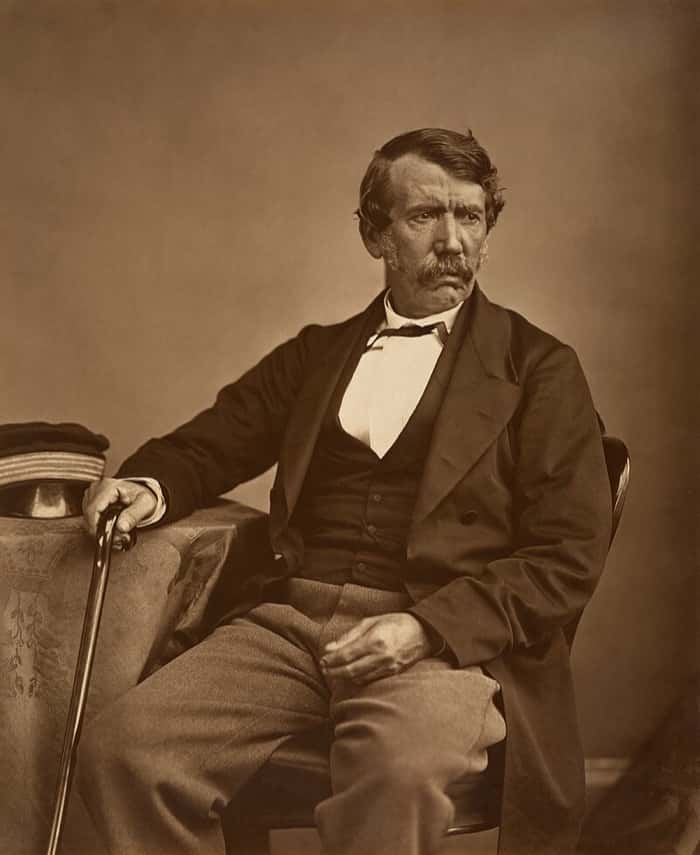
On March 19, 1813, Scotland welcomed into the world a man who would become one of the most celebrated explorers of the 19th century: David Livingstone. A doctor, missionary, and intrepid adventurer, Livingstone dedicated his life to traversing the African continent with ambitious goals — spreading Christianity, fighting against the slave trade, and charting regions that remained unmapped by Europeans. Among his many remarkable achievements, he reached Victoria Falls, and his prolonged disappearance from public contact inspired one of history's most quoted greetings: "Dr. Livingstone, I presume?"
Fun Facts:
- Humble Beginnings: Born into modest circumstances in Blantyre, Scotland, on March 19, 1813, the young David Livingstone spent his early years laboring in a cotton mill by day and pursuing his education during the nighttime hours.
- A Mission with a Purpose: Nothing could shake Livingstone's commitment to his calling. He journeyed to Africa serving as both a missionary and a doctor, driven by a dual passion for bringing Christianity to the continent and putting an end to the slave trade.
- An Epic Journey: Through his extensive travels across southern and central Africa, Livingstone painstakingly mapped enormous stretches of the continent, earning his place among the era's most consequential explorers.
- Discovering Victoria Falls: Livingstone made history in 1855 when he became the first European to document Victoria Falls, a remarkable geographical landmark. He chose to name it in honor of Queen Victoria, though the local Lozi people had long known it as "Mosi-oa-Tunya" (The Smoke That Thunders). This documentation significantly expanded global understanding of Africa's geography and natural wonders.
- Lost and Found: Perhaps the ultimate test of Livingstone's courage came during a stretch of years when he vanished from contact while deep in exploration. It wasn't until 1871 that Henry Morton Stanley, an American journalist, tracked him down in Tanzania and delivered the greeting that would echo through history: "Dr. Livingstone, I presume?"
- Final Days in Africa: The continent Livingstone had grown to love was also where he spent his last days. In 1873, he passed away in present-day Zambia, and his heart was buried in the African soil he had devoted his life to exploring. His body made the long journey back to London, where it was laid to rest in Westminster Abbey — a tribute befitting a man whose influence would ripple through generations to come.
- Legacy Lives On: The detailed maps, extensive journals, and tireless abolitionist work Livingstone left behind reshaped how the world perceived Africa and played a meaningful role in driving efforts to dismantle the East African slave trade.