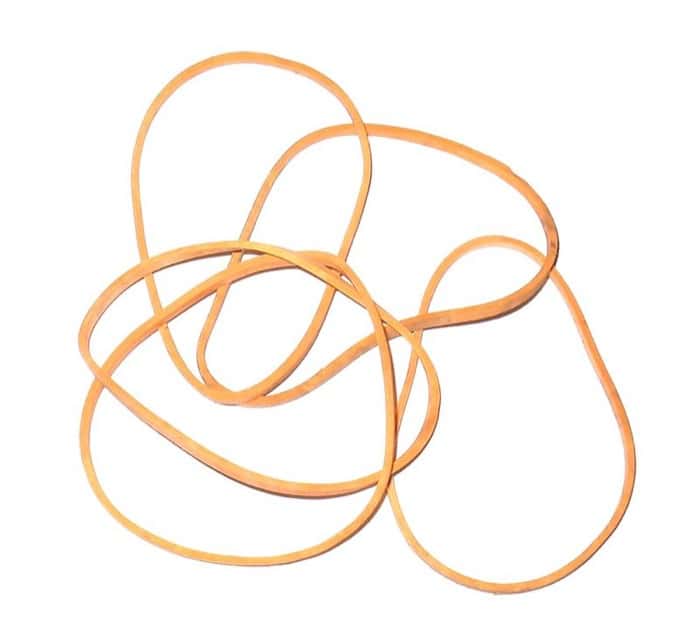
What do most people reach for without a second thought when they need to bundle papers or seal an envelope? The humble rubber band — and we have Stephen Perry to thank for it. Perry made a major mark on the rubber industry by creating vulcanized rubber bands specifically meant for holding together envelopes and bundles of paper. On March 17th, 1845, the rubber band received its official patent, an innovation that would prove to be a true game-changer and lay the groundwork for countless rubber products we rely on today. The invention also tackled a surging need for bicycle tires, a demand that traditional rubber simply couldn't meet. Compounding the problem, rubber at the time came primarily from trees — a resource that was vanishing at an alarming rate as demand continued to climb.
Interestingly, when Perry's creation first appeared in London during the mid-nineteenth century, nobody called them "rubber bands." Londoners instead used the term "elastic bands," a name inspired by the material's remarkable ability to stretch and snap right back to its original form. This stretchy quality made them especially handy for organizing offices and tackling a variety of tasks that benefited from their elasticity. Yet a looming problem cast a shadow over the invention's success: rubber trees simply couldn't grow fast enough to satisfy the ever-increasing appetite for rubber, turning elastic bands into an increasingly unsustainable product.
The rubber industry's mounting challenges eventually spurred a breakthrough. In 1909, German chemists rose to the occasion by engineering synthetic rubber capable of mimicking the elastic properties found in natural vulcanized rubber. Fast forward to the present day, and environmental consciousness is driving a new wave of innovation. There is a growing emphasis on developing more sustainable production methods and materials for rubber bands, helping to ensure that this remarkably versatile office staple remains available for generations to come.