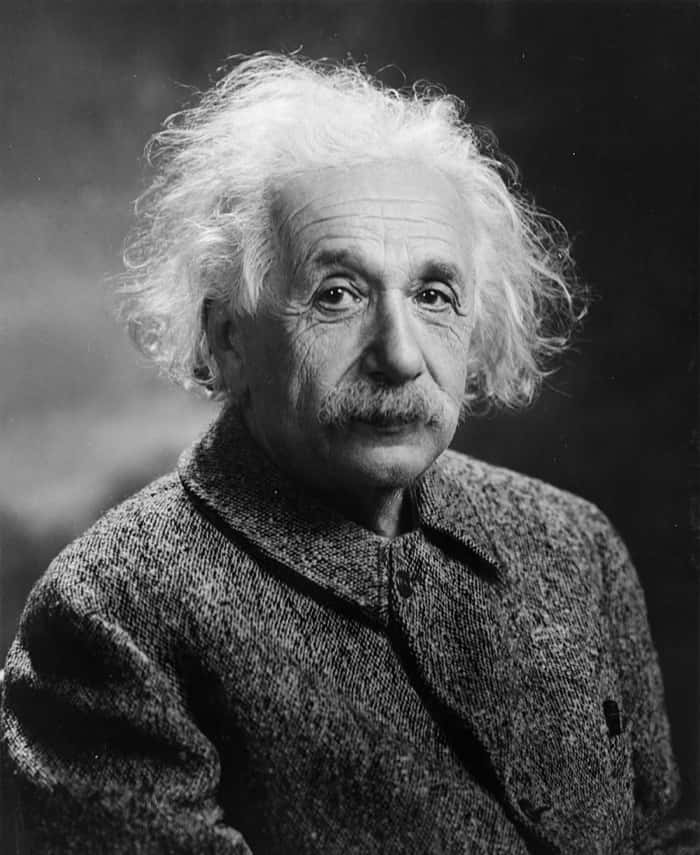
On March 14, 1879, in the city of Ulm, Germany, the world welcomed Albert Einstein — a figure who would go on to become one of history's most transformative physicists. His revolutionary theory of relativity, which he unveiled in the early 20th century, fundamentally changed the way scientists perceive the universe. With his iconic equation, E=mc², he demonstrated the profound connection between energy and mass, paving the way for both nuclear energy and the broader landscape of modern physics.
Einstein's genius extended well beyond the realm of theoretical physics. His groundbreaking research on the photoelectric effect — work that proved instrumental in the development of quantum mechanics — earned him the Nobel Prize in Physics in 1921. When the Nazi regime rose to power in the 1930s, posing a grave threat to Jewish intellectuals, Einstein made the decision to leave Europe. He relocated to the United States and took up a professorship at the Institute for Advanced Study in Princeton.
His impact, however, reached far beyond the laboratory. Einstein was a vocal champion of civil rights, pacifism, and the idea of global unity. His urgent warnings regarding nuclear weapons left a mark on international policy, while his deep commitment to humanitarian causes cemented his standing as not just a scientific giant, but a moral one as well.
Fun Facts:
- As a child, Einstein spoke late, which led his teachers to initially believe he was slow to learn. Yet this early obstacle hardly held him back — if anything, it sharpened his resolve and drove him toward the extraordinary scientific breakthroughs that would define his career.
- In 1952, he was offered the presidency of Israel, an honor he respectfully turned down.
- Following his death, scientists removed his brain for study and discovered an unusually high number of brain folds in regions associated with mathematical thinking.
- A passionate violinist, Einstein frequently credited music with helping him think more clearly.
- The brilliance of Albert Einstein didn't just reshape modern physics — it forged a legacy that continues to spark inspiration among scientists, thinkers, and dreamers across the globe.