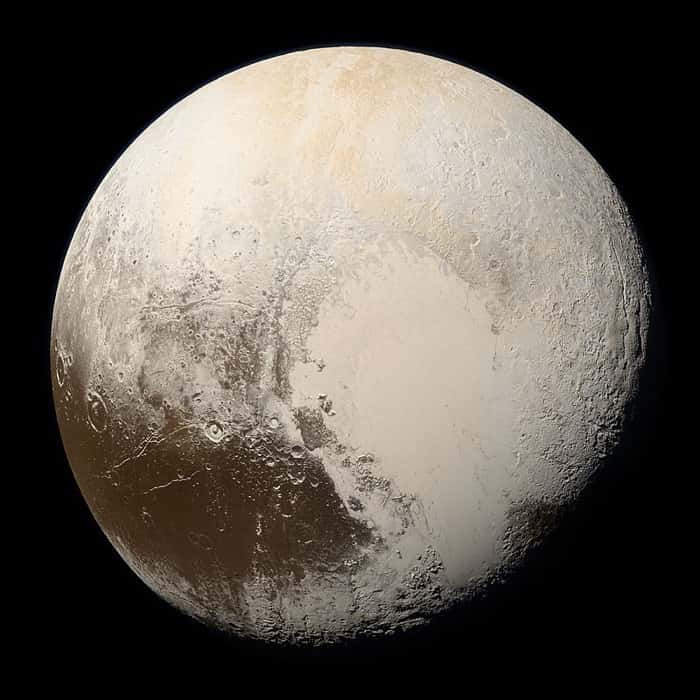
It was March 13, 1930, when Clyde Tombaugh, working at the Lowell Observatory in Flagstaff, Arizona, spotted something remarkable in the depths of space: a tiny icy dwarf planet that would come to be known as Pluto. For decades, this distant world held the proud title of our solar system's ninth planet, captivating both professional astronomers and casual stargazers. Even though it was eventually reclassified as a dwarf planet, the moment of its discovery stands as a major landmark in the history of space exploration.
The story actually began well before Tombaugh's breakthrough, rooted in the work of astronomer Percival Lowell. Lowell had run calculations suggesting that a mysterious "Planet X" lurked somewhere beyond the known planets, subtly tugging on the orbits of Neptune and Uranus. Taking up that challenge, Clyde Tombaugh painstakingly studied photographic plates taken through the telescope, comparing images captured at different times. Eventually, his persistence paid off—he identified a small celestial body shifting against the backdrop of stars. That moving speck was Pluto.
For more than 75 years, Pluto enjoyed its classification as the ninth planet in our solar system. That all changed in 2006, when the International Astronomical Union (IAU) established a formal set of three criteria that a celestial body must satisfy to qualify as a planet. Pluto fell short on one of those requirements, and just like that, it was reclassified as a dwarf planet. Still, the demotion hasn't diminished its allure—Pluto remains among the most fascinating objects orbiting our Sun.
Fun Facts:
- Pluto was named by 11-year-old Venetia Burney, who suggested the name after the Roman god of the underworld.
- It is smaller than Earth's Moon and has a highly elliptical orbit that sometimes brings it closer to the Sun than Neptune.
- In 2015, NASA's New Horizons spacecraft made history by becoming the first to visit Pluto. The mission provided us with stunning images of its icy surface, significantly expanding our knowledge of this distant world and sparking new questions about the nature of our solar system.
- Pluto has five moons, with Charon being the largest—so big that Pluto and Charon orbit each other like a double planet system.
- Though no longer classified as a planet, Pluto continues to capture the imagination of astronomers and space lovers worldwide.