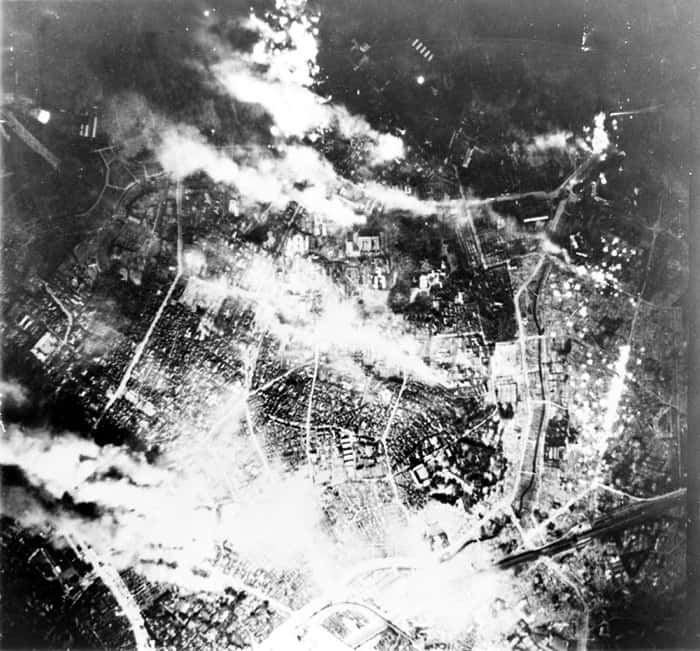
On the night of March 9-10, 1945, Operation Meetinghouse unleashed devastation on Tokyo that would claim 100,000 civilian lives and reduce 16 square miles of the city to smoldering ruins. The blow dealt to Japan's war efforts was enormous, significantly undermining the nation's capacity to continue fighting. By early 1945, the United States had been steadily ratcheting up military pressure on Japan. General Curtis LeMay spearheaded a shift in tactics, ordering incendiary bombing runs at low altitudes — a strategy designed to exploit the vulnerability of Tokyo's predominantly wooden buildings. Control of the Mariana Islands, secured by American forces during World War II, had provided critical staging grounds for B-29 Superfortress bombers, though these aircraft had proven frustratingly inaccurate when dropping their payloads from high altitudes.
Launching from Saipan, Tinian, and Guam, a fleet of 279 B-29 bombers flew toward the distant, foreboding glow of Tokyo's lights. At 12:15 a.m., the first incendiary bombs began detonating across the city. What followed was swift and catastrophic — 1,665 tons of napalm-filled incendiaries rained down, instantly setting the town ablaze. The resulting firestorm generated temperatures reaching as high as 1,800°F and winds so ferocious they could knock airplanes out of the sky. Desperate civilians who fled into the water for refuge were killed by the sheer intensity of the heat. Tokyo's defenses stood no chance, with a mere 8,000 firefighters hopelessly outmatched as whole neighborhoods were consumed by fire.
Despite losing 90 airmen in the operation, General LeMay declared it a military triumph — and the outcome emboldened him to expand firebombing campaigns to additional Japanese towns. The atomic bombings of Hiroshima and Nagasaki, combined with the Soviet declaration of war, would ultimately compel Japan's swift surrender, but the firebombing raids had already set the nation firmly on a path toward destruction.
To this day, the Tokyo Firebombing stands as one of history's most fiercely debated military operations, drawing intense scrutiny as a controversial attack directed at civilian populations. The Tokyo Firebombing Memorial exists to honor those who perished, while survivor testimonies continue to offer haunting reminders of the devastating human cost of war.