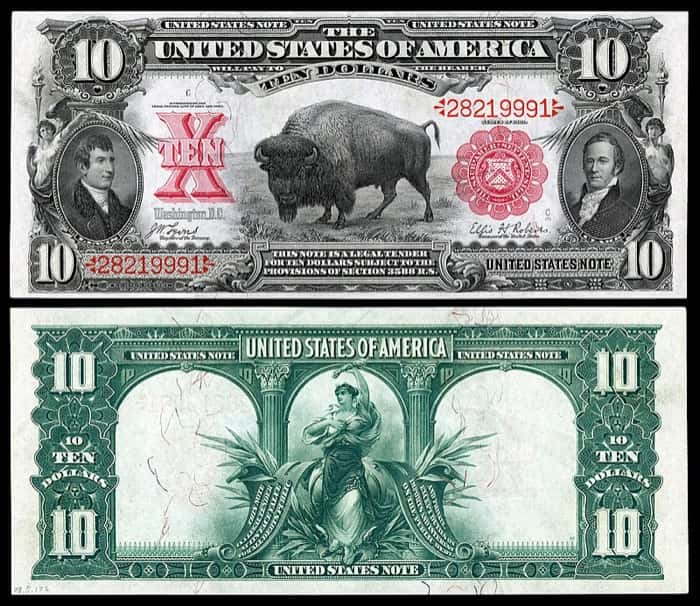
On March 10, 1862, the federal government took a bold and unprecedented step that would forever reshape American finance. For the first time, the United States issued paper money—available in denominations of $5, $10, and $20. Known as United States Notes or Legal Tender Notes, they represented something truly revolutionary. This wasn't merely a different way to pay for things; it was an entirely new idea about what money could be. These bills were fiat currency, deriving their worth not from gold or silver reserves but purely from the government's declaration that they held value.
The backdrop to this financial experiment was nothing short of desperate. The American Civil War was raging, draining the Union's coffers at an alarming rate. Traditional methods of raising funds—taxation and borrowing—simply couldn't keep pace with the soaring costs of the conflict. Finding a new and more effective approach wasn't just a matter of preference; it had become an absolute necessity.
Congress laid the groundwork by passing the First Legal Tender Act in February 1862, which authorized the creation of $150 million in paper currency. Just weeks afterward, on March 10, these notes entered circulation and immediately stood apart from anything Americans had used before. Printed on each bill was a straightforward but powerful declaration: "This Note is a Legal Tender for all debts, public and private." What made them truly different from earlier forms of currency was that they couldn't be exchanged for gold or silver. Instead, their worth existed because the law said so—a principle that gave rise to the very concept of 'legal tender'.
The distinctive green ink on the backs of these bills quickly earned them the nickname "greenbacks"—a term that would become synonymous with American money itself. The artwork was eye-catching, too. Alexander Hamilton graced the $5 bill, Daniel Webster appeared on the $10, and Liberty adorned the $20. Still, plenty of skeptics refused to put their faith in paper currency. Hard-money advocates—staunch believers in gold and silver—viewed the whole endeavor as a reckless gamble, warning it would unleash inflation and economic ruin. But the reality was stark: soldiers needed to be paid, suppliers needed compensation, and the war effort demanded fuel. Gradually, public sentiment shifted. Greenbacks wove themselves into the fabric of everyday commerce. Their value rose and fell throughout the war years, yet they managed to hold the national economy together when it mattered most.
Those pioneering paper bills set the stage for the modern currency systems and central banking structures we know today. Remarkably, United States Notes continued circulating for more than a century, finally being retired in 1971.