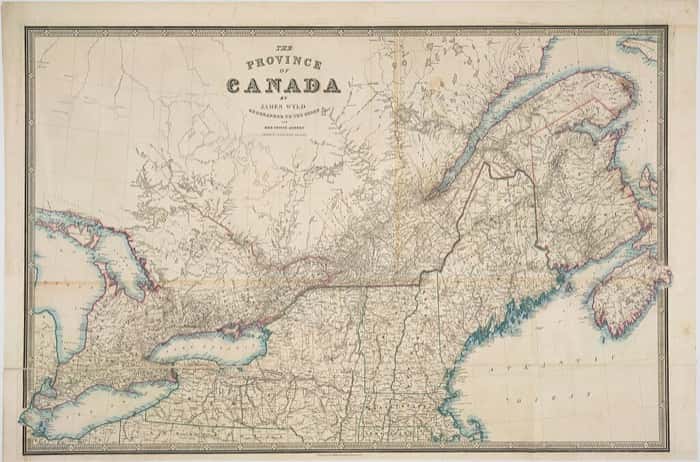
It's not every day that two territories wage an intense struggle to merge into a single nation — yet that's exactly the story of Upper and Lower Canada under British rule. On July 23rd, 1840, the Act of Union 1840 was passed, declaring the unification of Upper and Lower Canada into what would become the Province of Canada, governed by a single legislative body. Among the sweeping changes that followed, one of the most dramatic was the abolition of French as a national language.
Fun Facts
- The Act of Union 1840 goes by another name as well — the British North America Act of 1840.
- On July 23, 1840, the British parliament gave its approval to the legislation. However, an official proclamation was also required, and that took place on February 10, 1841, in Montreal.
- With this legislation, the separate colonies of Lower Canada and Upper Canada ceased to exist, replaced by a newly created political entity known as the Province of Canada.
- Worth noting is that in the years following the War of 1812, the elected assembly had come to include a significant number of French Canadians.
- The rebellions of 1837-1838 set the stage for this sweeping change. The Act of Union 1840 grew directly out of the Durham report — specifically the final Durham Report of 1839, which recommended merging Upper and Lower Canada as a means of putting an end to the revolts.
- Once the Act of Union took effect in 1840, the French language was banished from all official spaces across the country.
- Certain institutions tied to French-Canadian culture and identity were suspended as well.