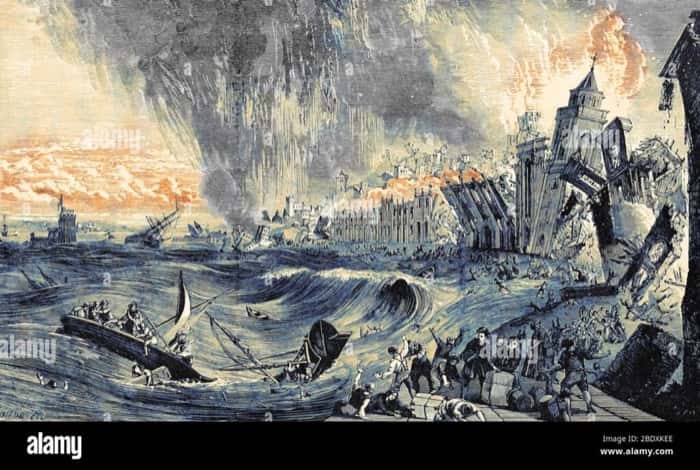
On November 1st, 1755, the thriving Portuguese capital of Lisbon was forever changed. A catastrophic earthquake — unprecedented in its magnitude — devastated the city, claiming the lives of fifty thousand people. What had been a prosperous, bustling metropolis was reduced to ruins, and those who survived faced the monumental task of rebuilding their city from the ground up.
Life Before the Earthquake
Lisbon, prior to the disaster, thrived as a major hub for the gold and diamond trade. This commerce had elevated many of the city's merchants to positions of wealth and social prestige. Remarkably, ten percent of Portugal's entire population called the city home. Its strategic position as a port along the Atlantic Ocean made it an economic jewel for the nation. Religion also played a central role in daily life — Catholic religious authorities had established a strong presence there, making the residents devout Catholic Christians.
November 1st, When Disaster Struck Lisbon.
The people of Lisbon were observing All Saints day when catastrophe arrived. During the early morning hours, three consecutive tremors rocked the city in rapid succession. Scientists have since estimated that the quakes likely reached a magnitude of 8.0, though no recording equipment existed at the time to confirm this. The shaking was so powerful that it could be felt as far away as the North-Western country of Morocco.
Lisbon's location along the shore compounded the destruction. The earthquake's negative pressure system pulled a massive tsunami inland, with waves estimated to have exceeded 20 feet in height. Those who managed to survive the initial quake found themselves trapped by the surging sea. In the aftermath, the people of Lisbon dedicated themselves to the painstaking work of restoring their beloved city to her former glory.