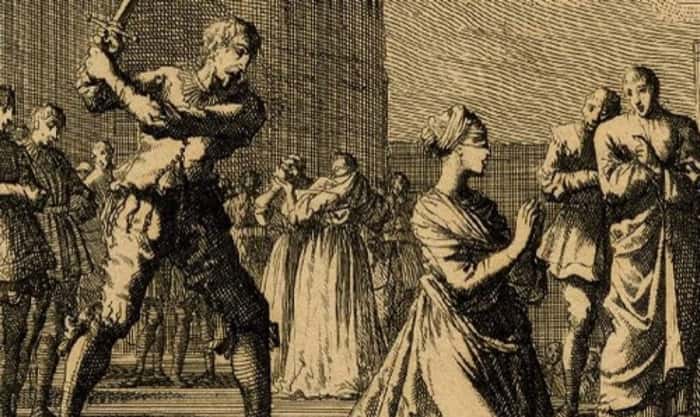
On May 19, 1536, Anne Boleyn — the second wife of Henry VIII — met her end by execution, the culmination of what stands as one of the most flagrantly corrupt trials in all of history. The roots of this grim event, though, stretch back to the king's first marriage.
Henry VIII had initially been wed to Catherine of Aragon. When she failed to give him a male heir, however, his attention turned to one of her ladies-in-waiting, Anne Boleyn, whom he hoped might succeed where Catherine had not. The problem was that dissolving a royal marriage — whether through divorce or annulment — was extraordinarily difficult in that era, even for a reigning monarch.
The king, along with his advisors, spent several years searching for legal avenues to dissolve the marriage. All the while, Henry pursued Anne openly, which infuriated Catherine and those loyal to her. When the Church ultimately refused to grant him permission to end the union, Henry took a drastic path: he broke from the Church entirely, proclaimed himself the head of the newly established Church of England, and had numerous people put to death along the way. With that accomplished, he awarded himself an annulment and took Anne as his bride.
Anne's fortunes, however, proved no better than her predecessor's. She likewise failed to produce a male heir, and before long, Henry's eye wandered to yet another lady-in-waiting — Jane Seymour. This time, though, simply annulling the marriage wasn't a practical option. Doing so could have implied that his union with Catherine had never truly ended, which would have created serious complications with Catherine's allies. Nor did Henry have any appetite for repeating the prolonged ordeal that had accompanied ending his first marriage. Instead, he leveled charges against Anne: seducing him through witchcraft, committing adultery, and conspiring against him with her allies. The trial that followed was a complete sham. Not a shred of genuine evidence was offered to support any of the accusations, yet the verdict came swiftly — guilty on all counts, with a sentence of death. On May 19, Anne was beheaded on Tower Green. Just 19 days later, Henry and Jane Seymour were married.